


“Magic Carpets” residency in collaboration with the Latvian Association of the Blind and artist Laima Jaunzeme
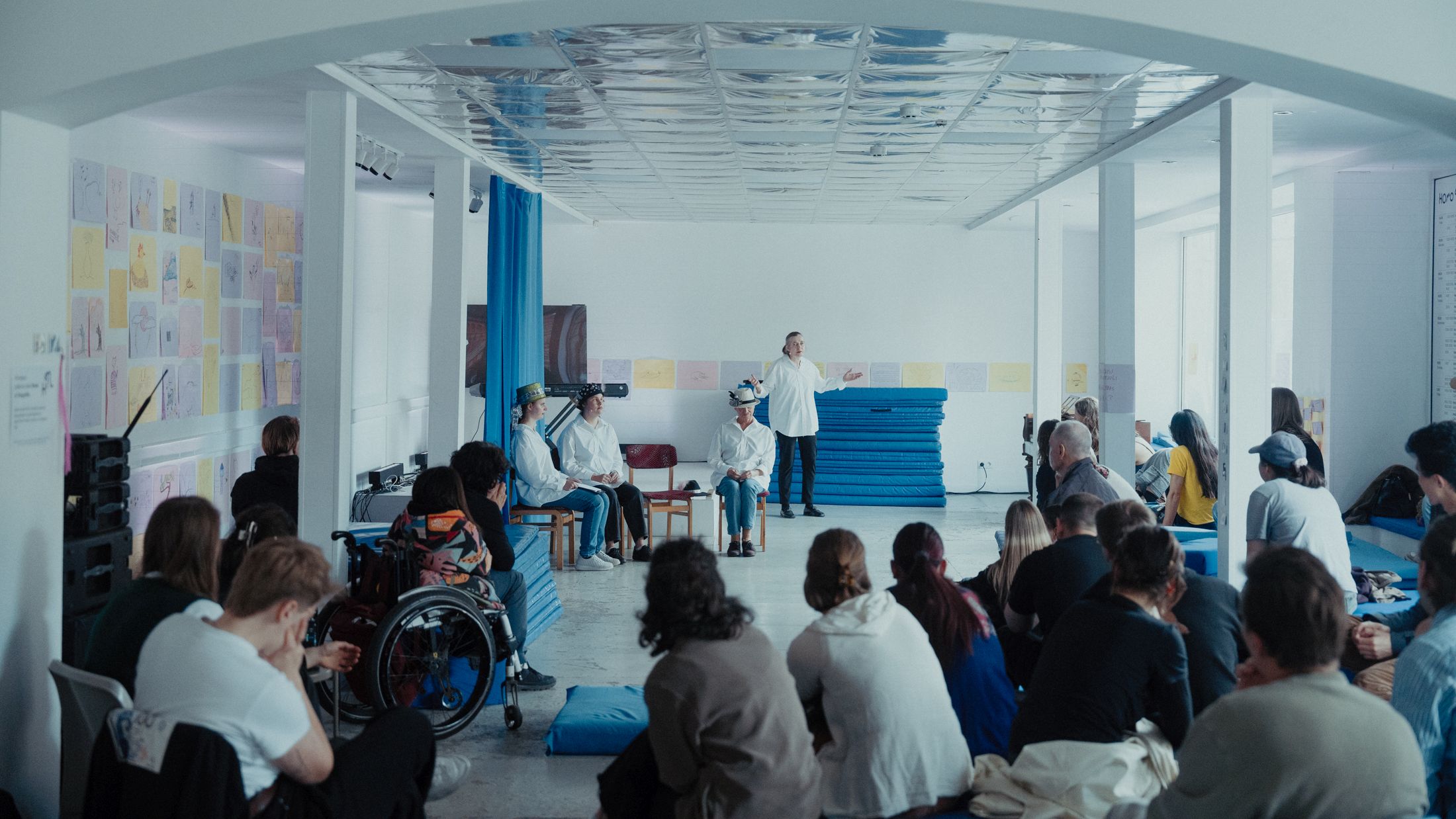
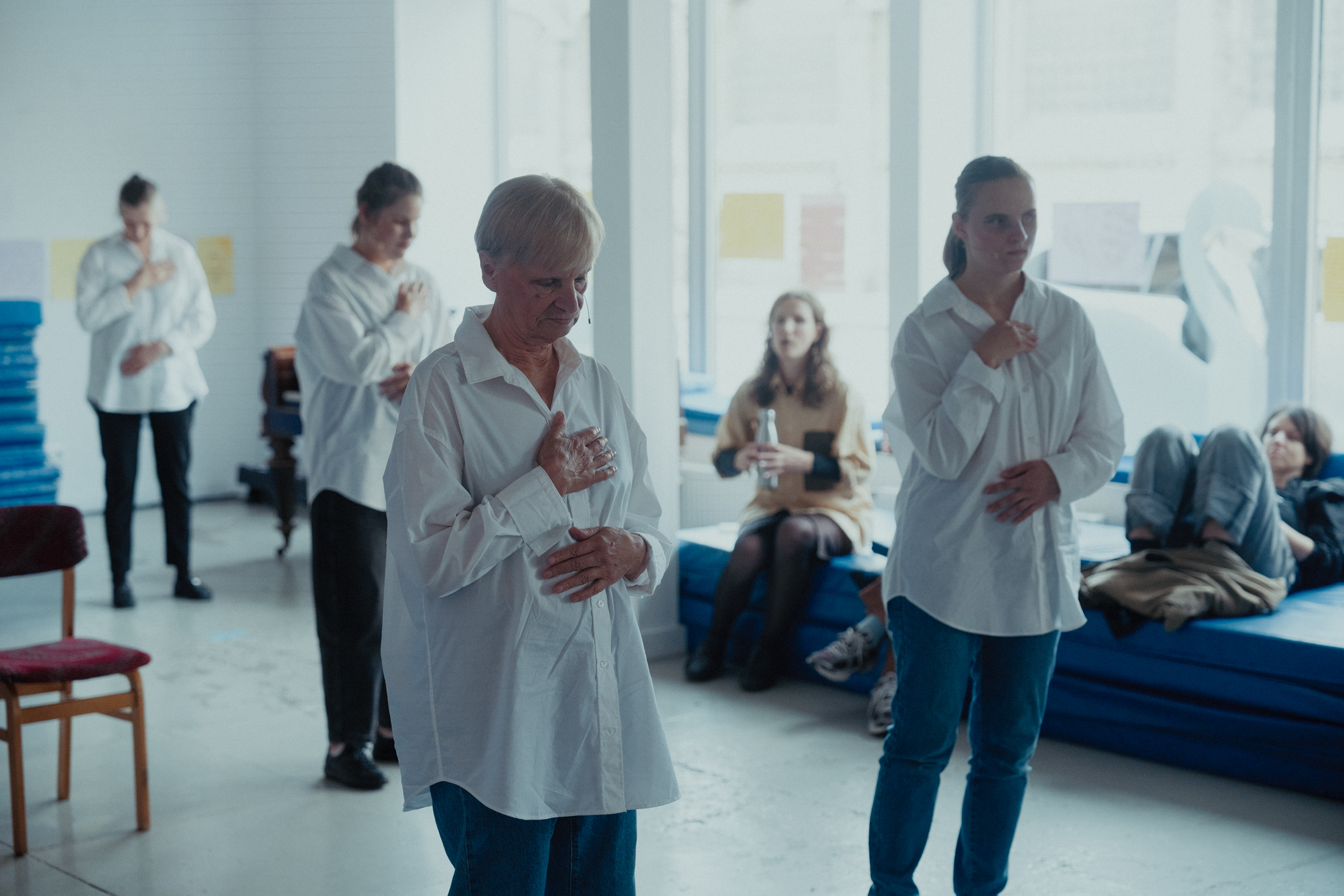
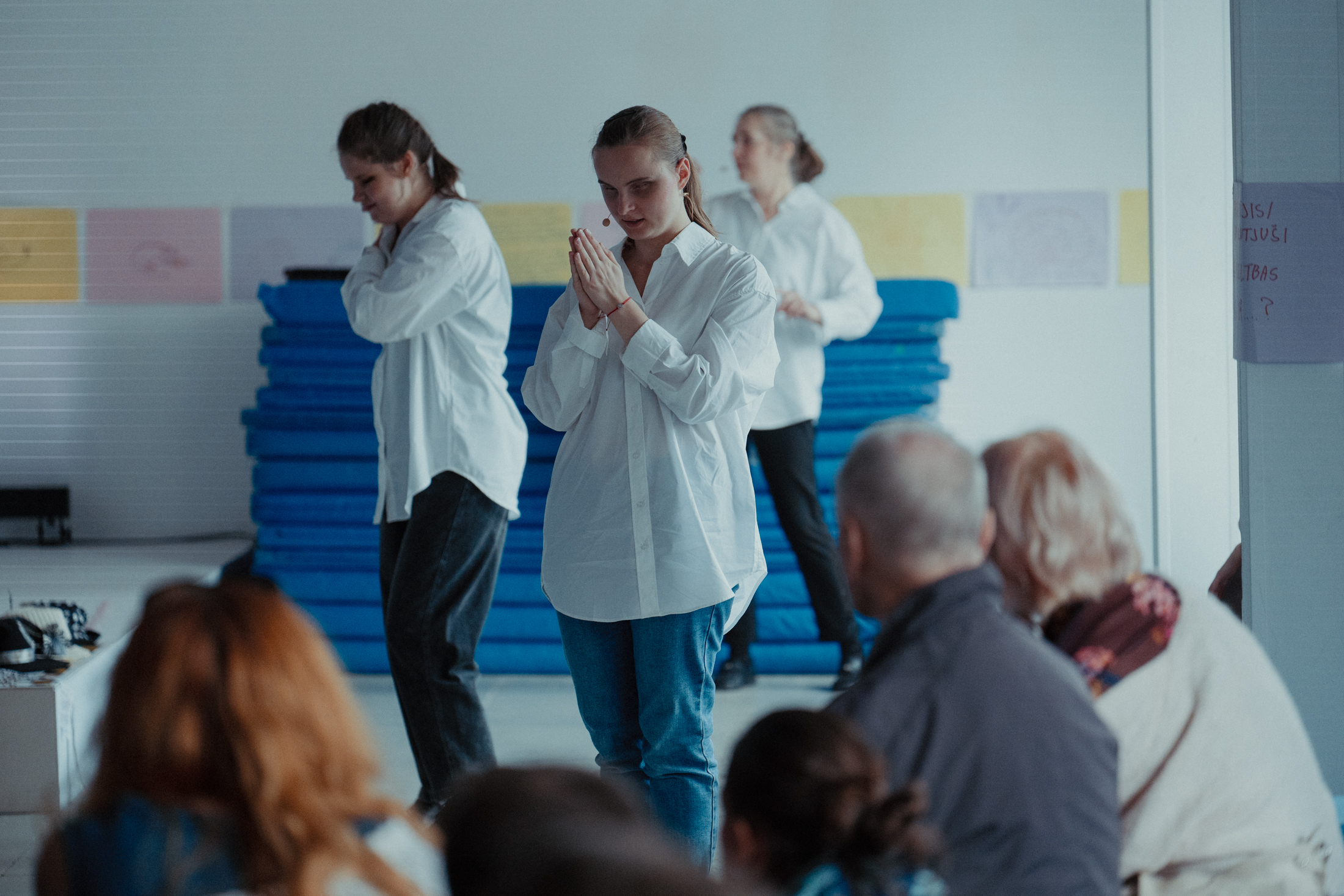
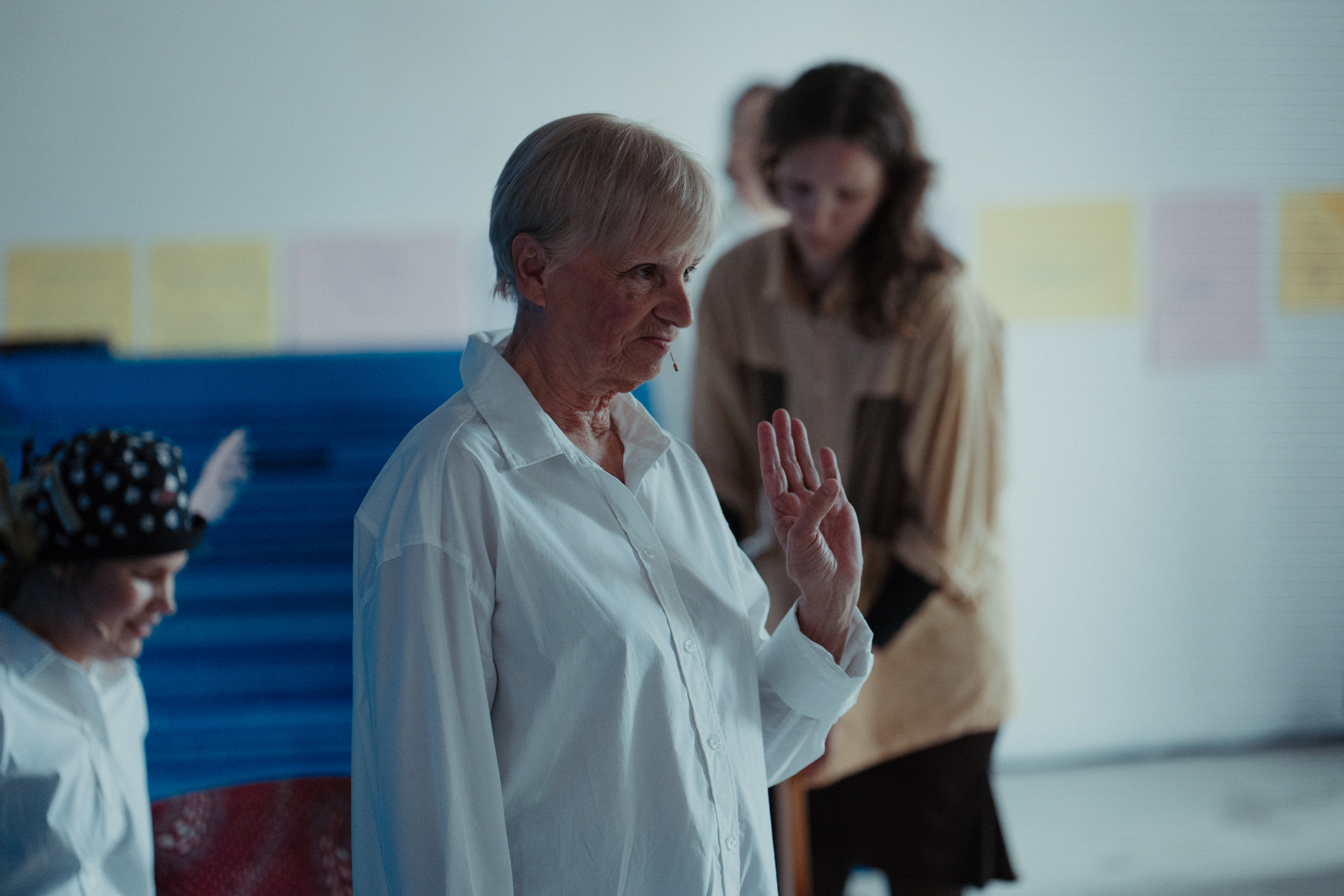
Throughout August, four women from the Latvian Association of the Blind – Agnese, Jeļena, Zane Juniore, and Zane Seniore (Zane the Grandmother) – met three times a week with dance artist Laima Jaunzema as part of the “Magic Carpets” international platform residency. The process began with a question: If you had a space where you could do anything creative you wanted, what would you do? What would happen there? The residency was dedicated to a collective creative process, with a final presentation “The Concert of Deferred Dreams” at the International Festival of Contemporary Theatre “Homo Novus”.
Last year, the New Theater Institute of Latvia collaborated with the Latvian Association of the Blind and artist Laima Jaunzema, engaging different people in creative workshops during which the group collectively explored new methods for developing inclusive dance practices. Drawing on the knowledge and insights gained previously, Laima began this residency with new goals and questions.
The questions raised about the creative process and personal space in the context of women artists bring to mind more than a few discussions and works of art that address these issues. In every era, women artists have faced various obstacles and challenges in their creative work—signing their works with their own names, studying art, practicing and earning a living through art, balancing motherhood with work, the lack of creative space, and so on. Times change, but the conversation remains relevant. In the context of the residency, the issue also brings to the fore challenges of accessibility, and as is mentioned repeatedly during the concert, these challenges are often shaped by people’s prejudices rather than an inability to make practical changes. “The Concert of Deferred Dreams” encourages us to question several prejudices that not only create obstacles for others but can also lead the thinker themselves to develop a rather narrow, predictable, and elitist understanding of the world, art, creativity, and so on.
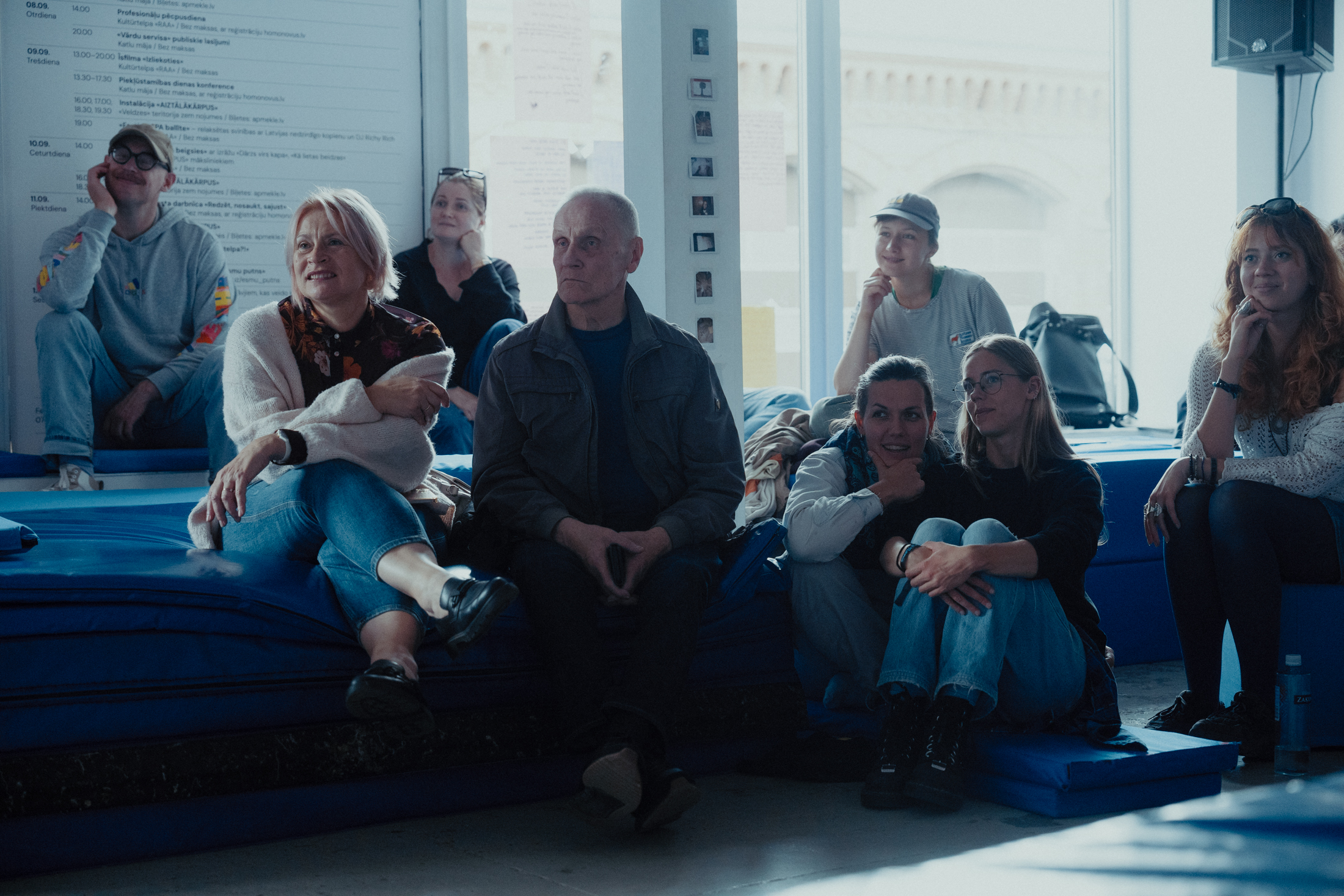
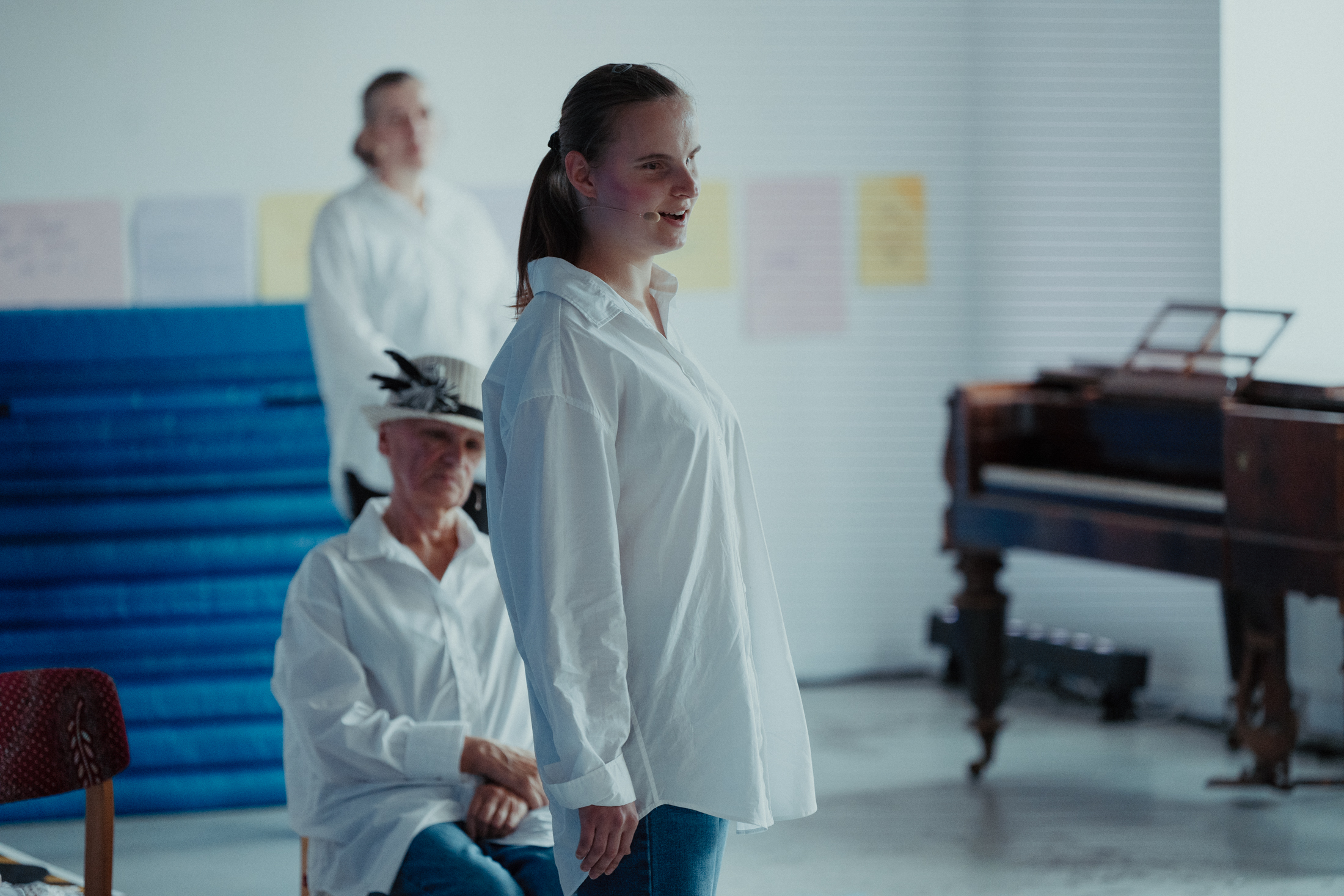
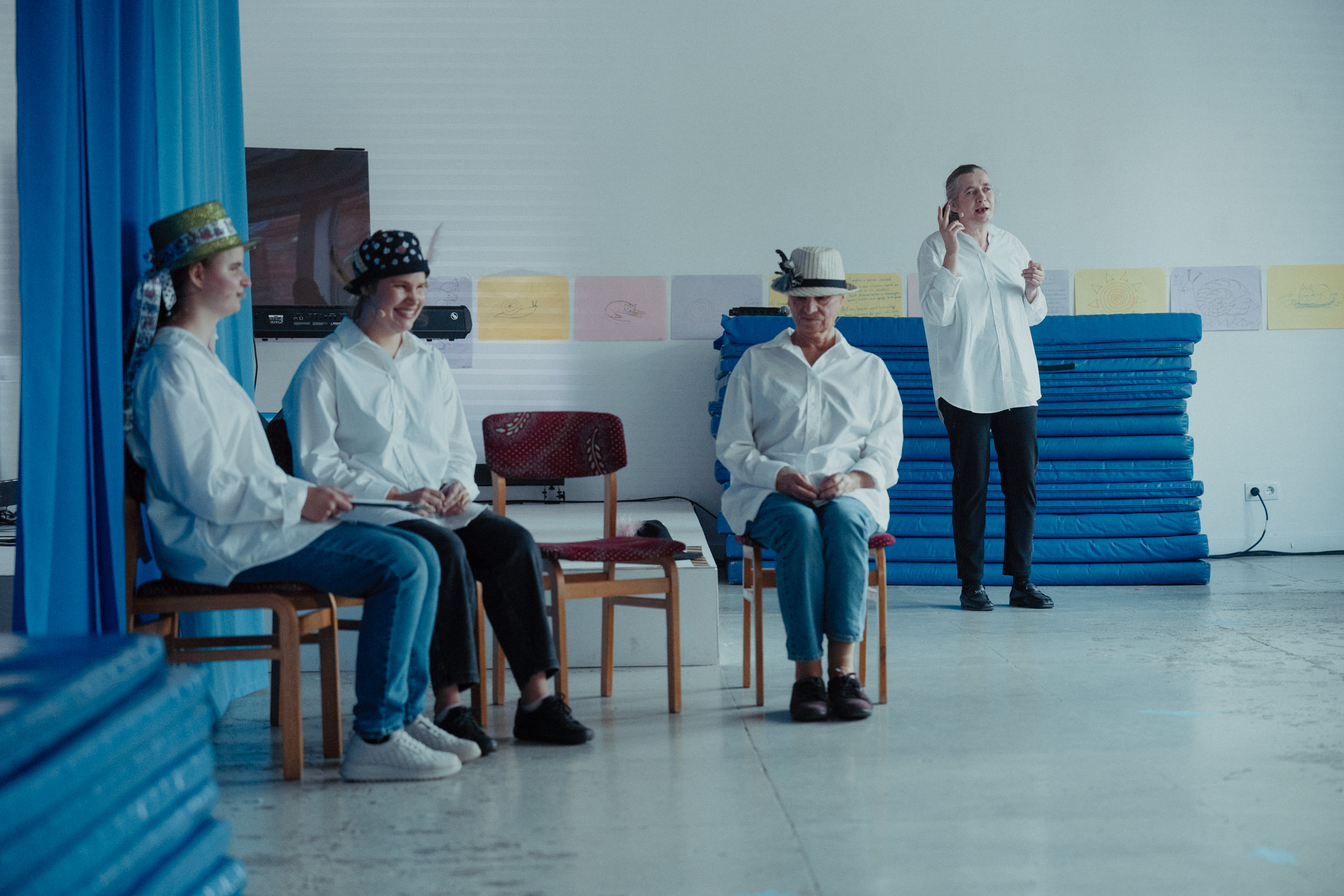
Photos: Andrejs Strokins
Laima opens the concert with the following address:
Hello, and thank you for being here! My name is Laima Jaunzema, and I want to begin with the word “concert.”
The word concert comes from the Latin concertare. Its original meaning had nothing to do with music or harmony. It described the ability to argue, to fight, to measure oneself with another.
Later, this meaning turned almost completely upside down — which I think is a profound shift, because in order to communicate deeply, we also need to know how to deal with conflict. By the end of the 16th century, concertare had come to mean to coordinate, to discuss, to reach agreement, to do something together. From there came concerto, and eventually the word arrived at what we understand as a concert today: different people doing something together in order to create something for others to experience.
Our possibilities are often shaped by what we have access to — what we know, where we are expected to belong, and what we are allowed to do. What we have access to also shapes the horizons of what we are able to imagine as possible. A lack of access not only limits who has the possibility to fulfil their dreams — it also limits the range of what we can imagine as desirable or possible, for ourselves and for others. And perhaps that is why it is worth asking not only how to fulfil a dream, but also which dreams we no longer want to accept as the only possible fulfilment — or as something that should belong only to ourselves.
We worked together throughout August, three times a week, and we began with a question:
If you had a space — a place where you could do anything creative you wanted — what would you do? What would happen in that space?
From this question, from detours and different experiments, the presentation you are about to experience took shape.
What you are about to experience is the result of an incredible input from four participants — their ideas, activity, time and courage; overcoming themselves and their fears; meeting and sharing.
Today, performing Zane Juniore, Agnese, Jeļena and Zane Vecmāmiņa.
In this process, I worked as an artist and facilitator — like a sponge- collected information, absorbed it, and offered some frames, rules of the game and situations in which ideas could begin to move.
The time of Strazdu Muiža perhaps doesn’t entirely fit here, because at Strazdu Muiža there was always the next meeting to come. After today there won’t be another that kind of meeting. But however they will take the risk now — because they have shown up.
Thank you, from all my heart, to the four of you, for always showing up!
And then, like the deep time of the Strazdu Muiža floorboards, the red chairs, the trees fallen in the storm — four women talking,
where is the light in the backstage, see you tomorrow…
And the wind, the lake, towards Jugla.
And poetry, poetry, poetry.
And steps, steps, steps.
And scratches, breaths and sighs.
Original sound material by Grēta Garjāne.
Practical Infinity and Action — Linda Krūmiņa, NTIL, Homo Novus.
Technical support: Juris.
Let’s begin!
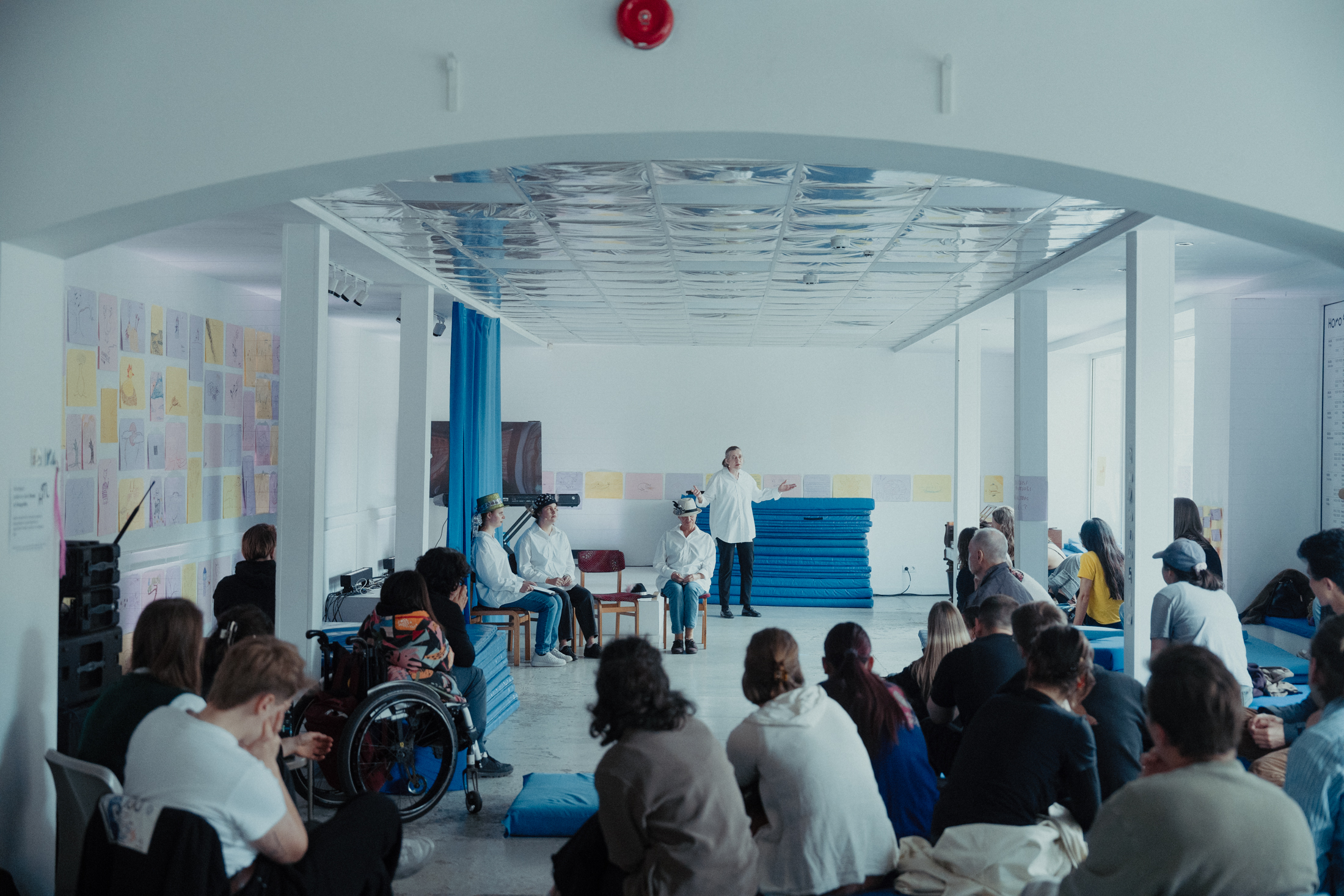
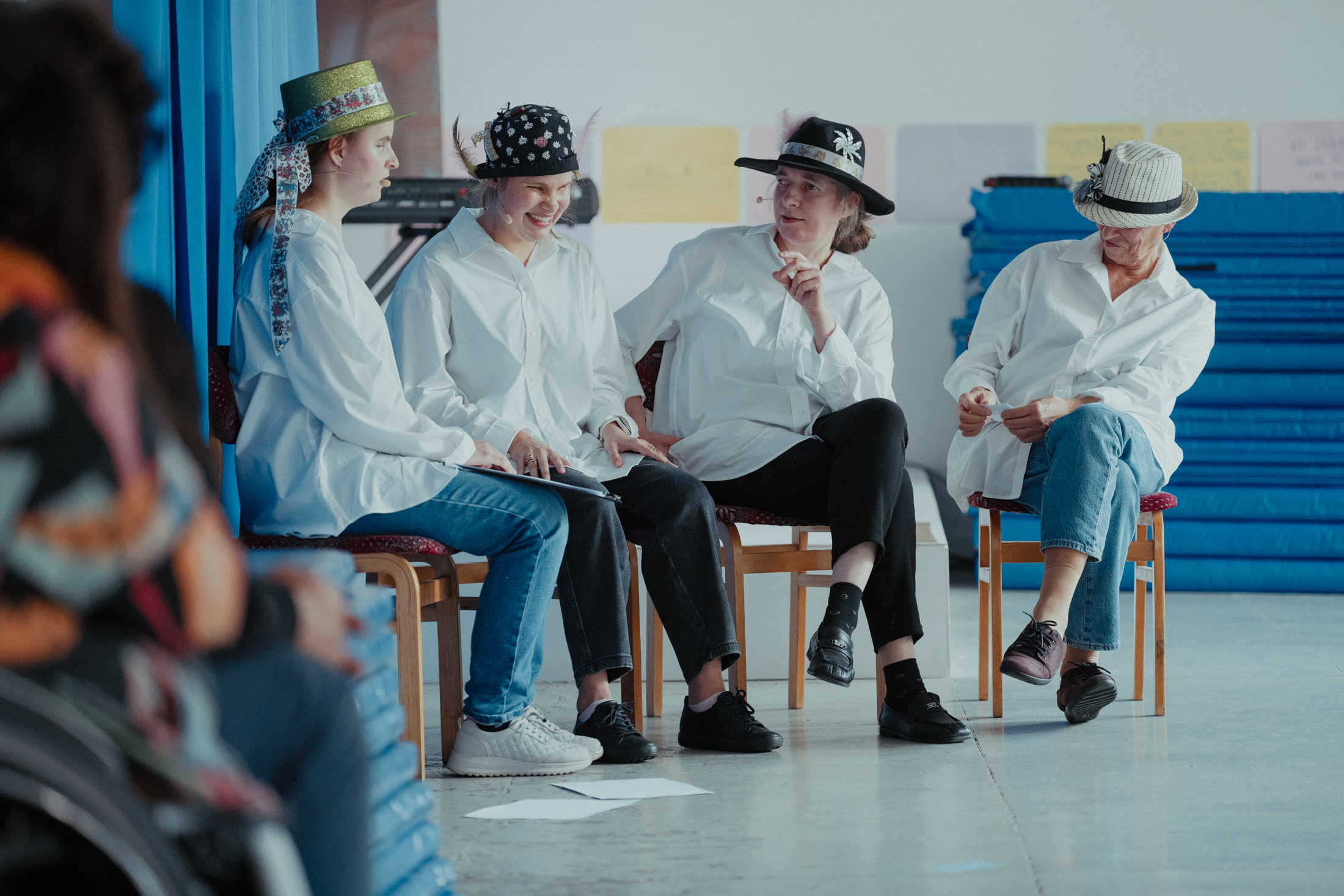
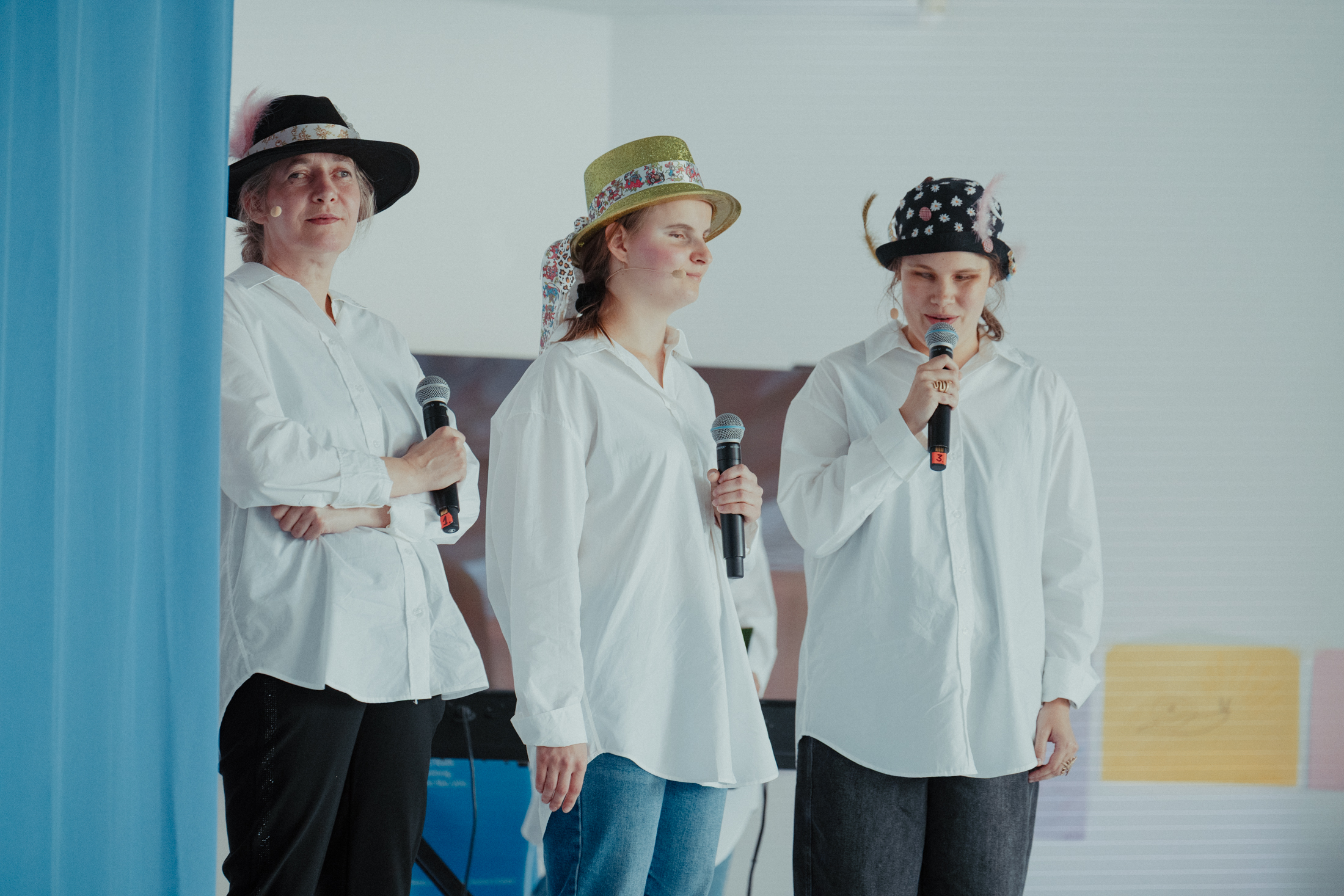
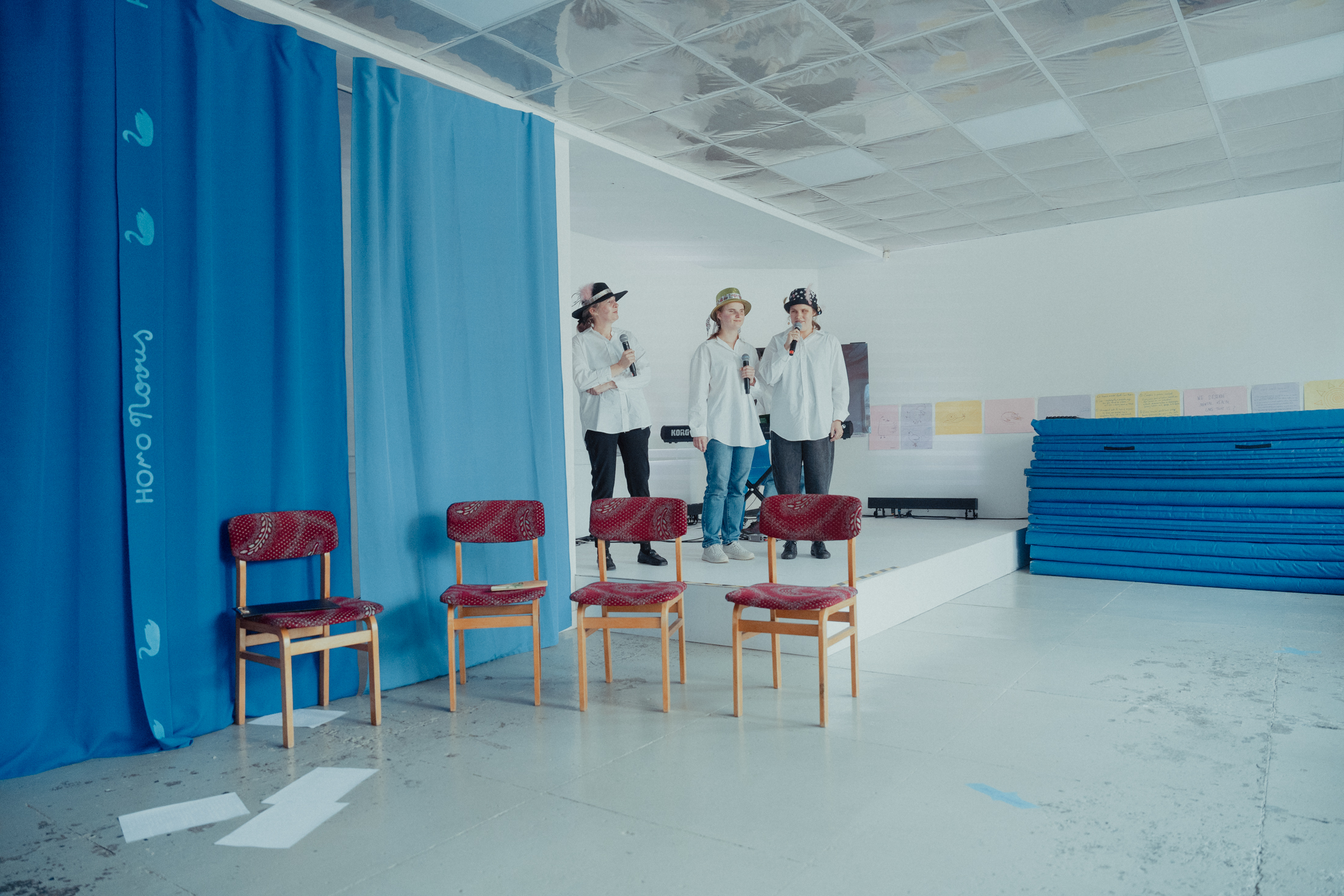
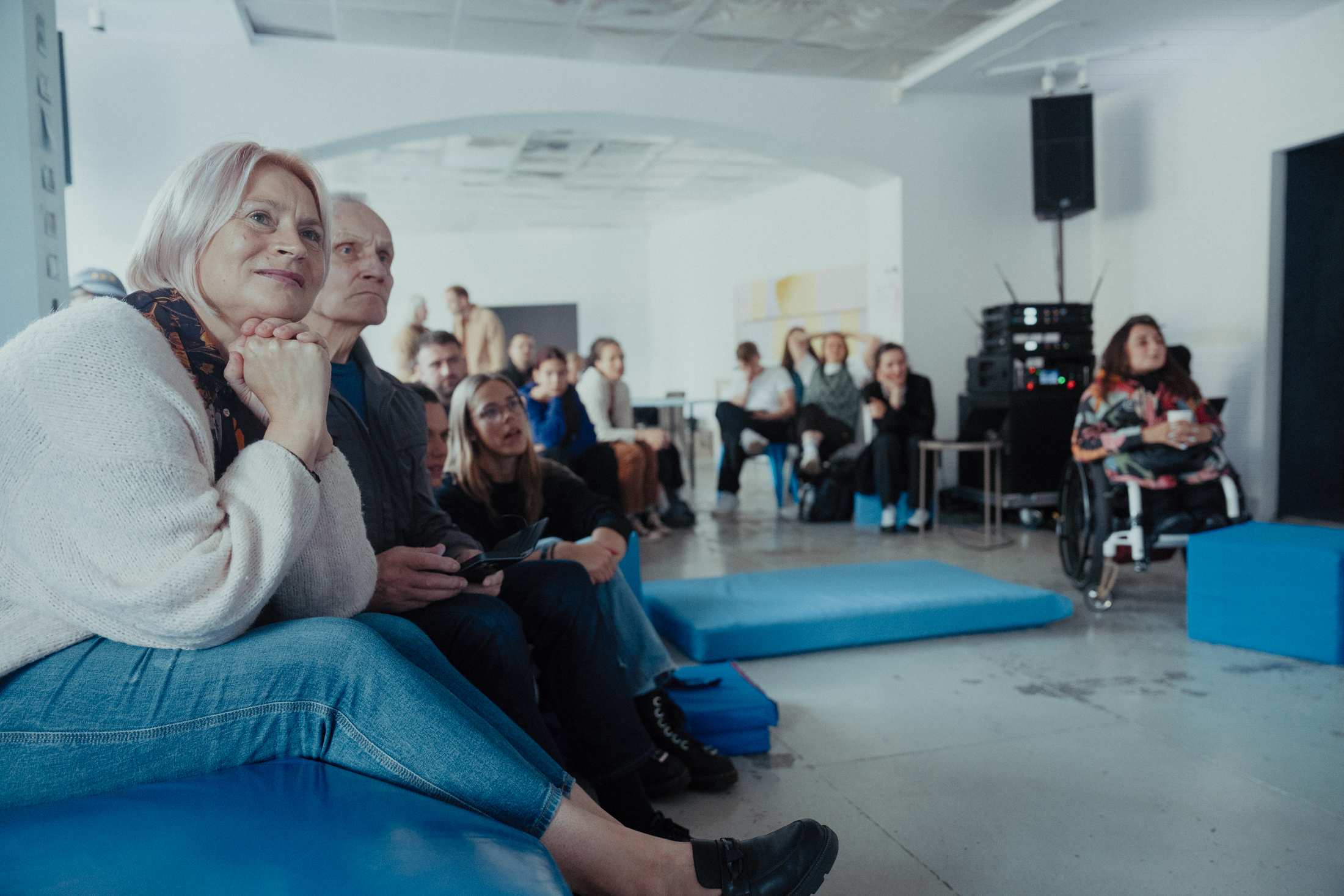
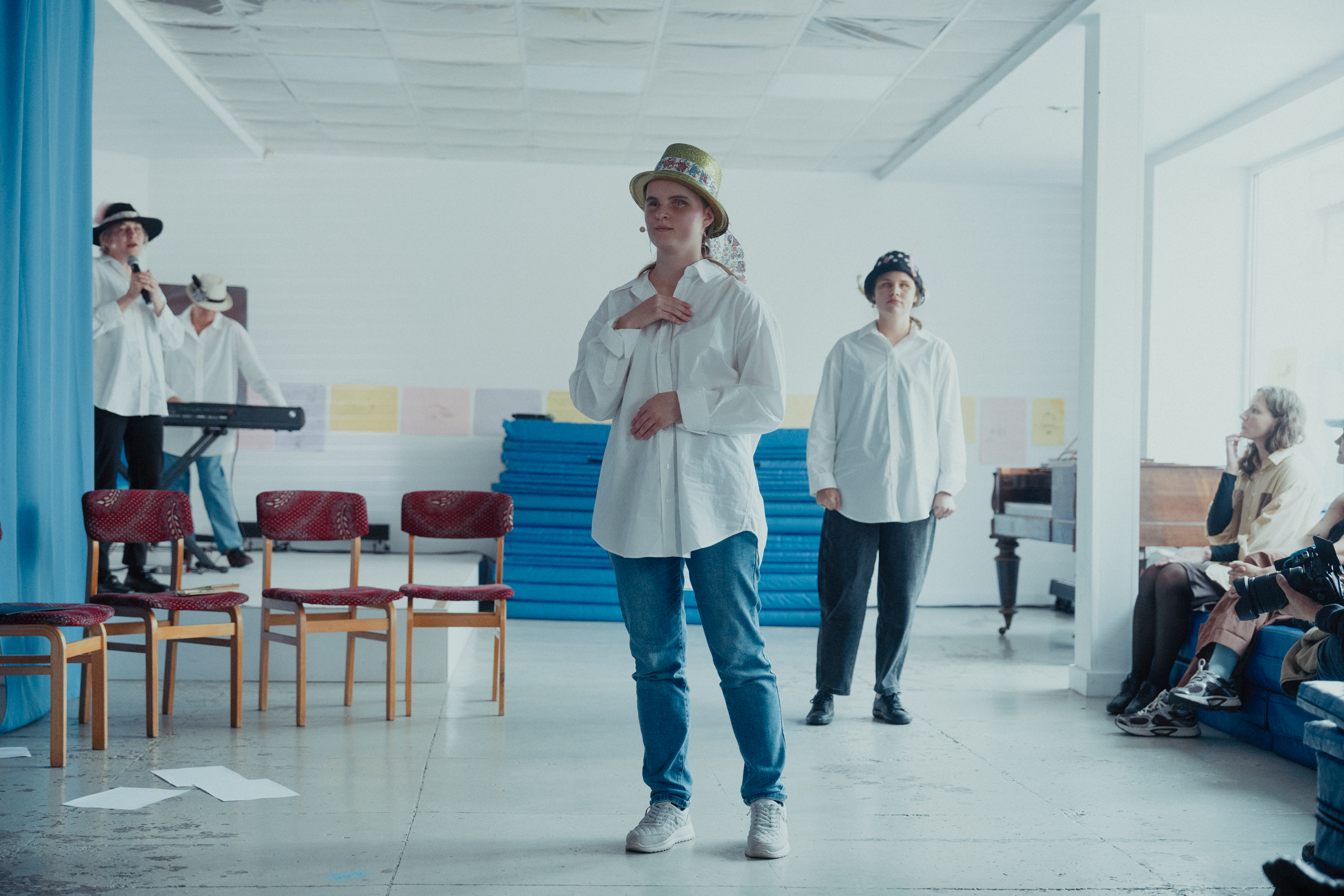
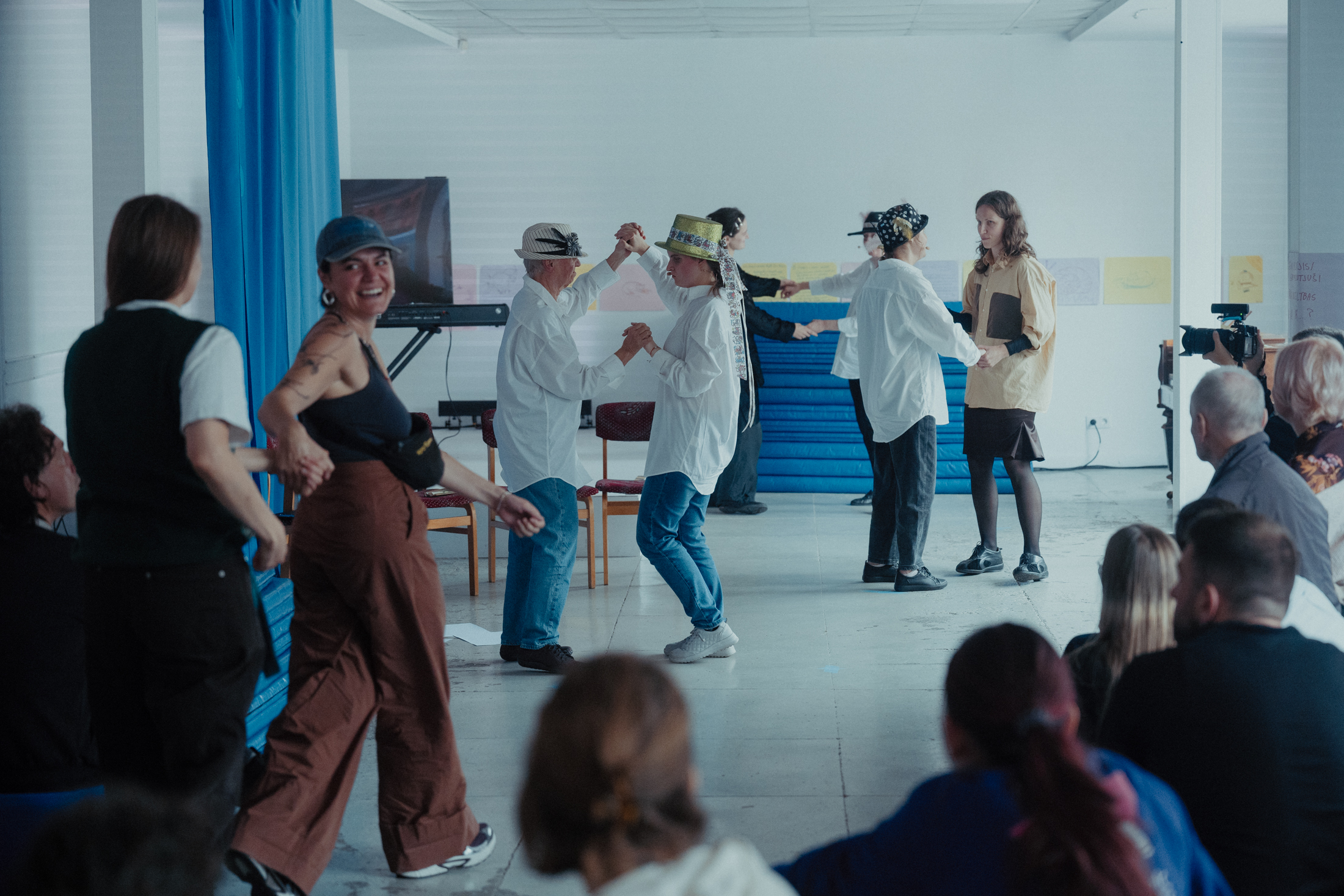
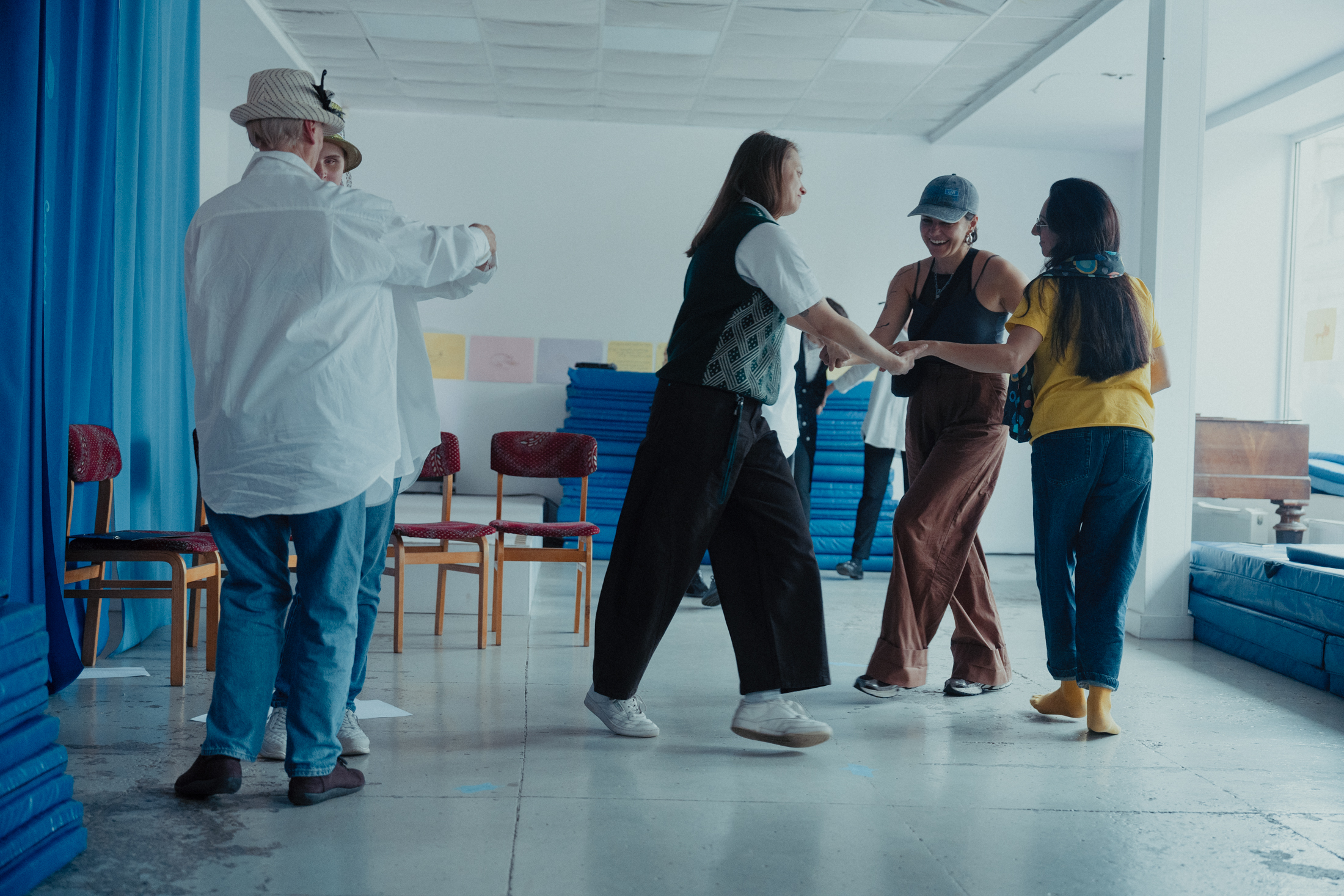
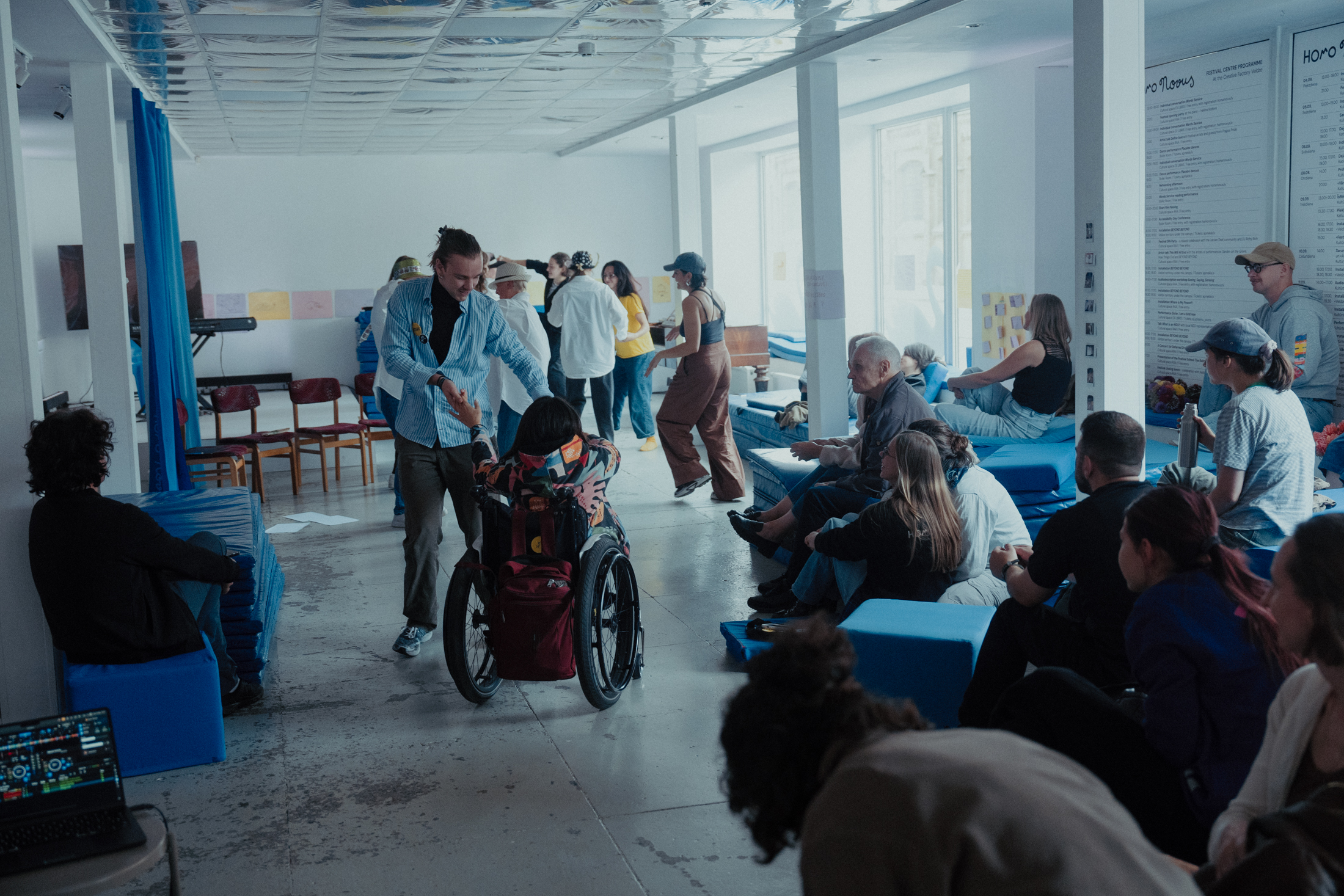
During the concert, four women shared their creative dreams, interests, and goals, but also spoke openly about the realities and challenges involved in achieving them. They did not hide or romanticize what it means to take the stage or become part of the broader arts community as blind or visually impaired women. Their reflections touched on everyday life: the challenges they face while studying at university, navigating the higher education system, visiting institutions, and performing seemingly mundane tasks in an environment that is not always adapted to their needs.
This also revealed a gap between the freedom that art, as we imagine it, can offer, and the barriers that still exist in education, cultural institutions, and society. Hierarchies, elitism, and stereotypes do not disappear upon entering an art school, a theater, or a festival. They can be reproduced through expectations about who can become an artist, what kinds of bodies and experiences belong on stage, and what is considered artistic knowledge.
A shift in perceptions rarely occurs in a chronological and logical sequence. Most often, it is a network of various events and moments that expands in all directions simultaneously. This was also reflected throughout the festival’s program, where, through various event formats, blind or visually impaired people were invited to experience and also create art—an audio-description workshop, testing and experiencing audio descriptions of performances, and a tactile tour. “The Concert of Deferred Dreams” was a polyphonic, bold, and moving performance, brimming with joy and creativity, finding a balance between harmony and moments of individual voices.
Photos: Andrejs Strokins
“Magic Carpets” is a Creative Europe platform uniting 17 European cultural organisations (14 active members and 3 partners for 2025–2028). It supports emerging artists as they embark on creative journeys in unfamiliar lands, working with local communities to produce new artworks that highlight local identities, enhance storytelling, and promote cultural accessibility and activism.
For more information, visit:
https://theatre.lv/category/magic-carpets/
https://magiccarpets.eu
“Magic Carpets” platform and artist residencies are co-funded by the EU’s Creative Europe programme.
