


“Magic Carpets” Residency: Inclusive Dance Practices
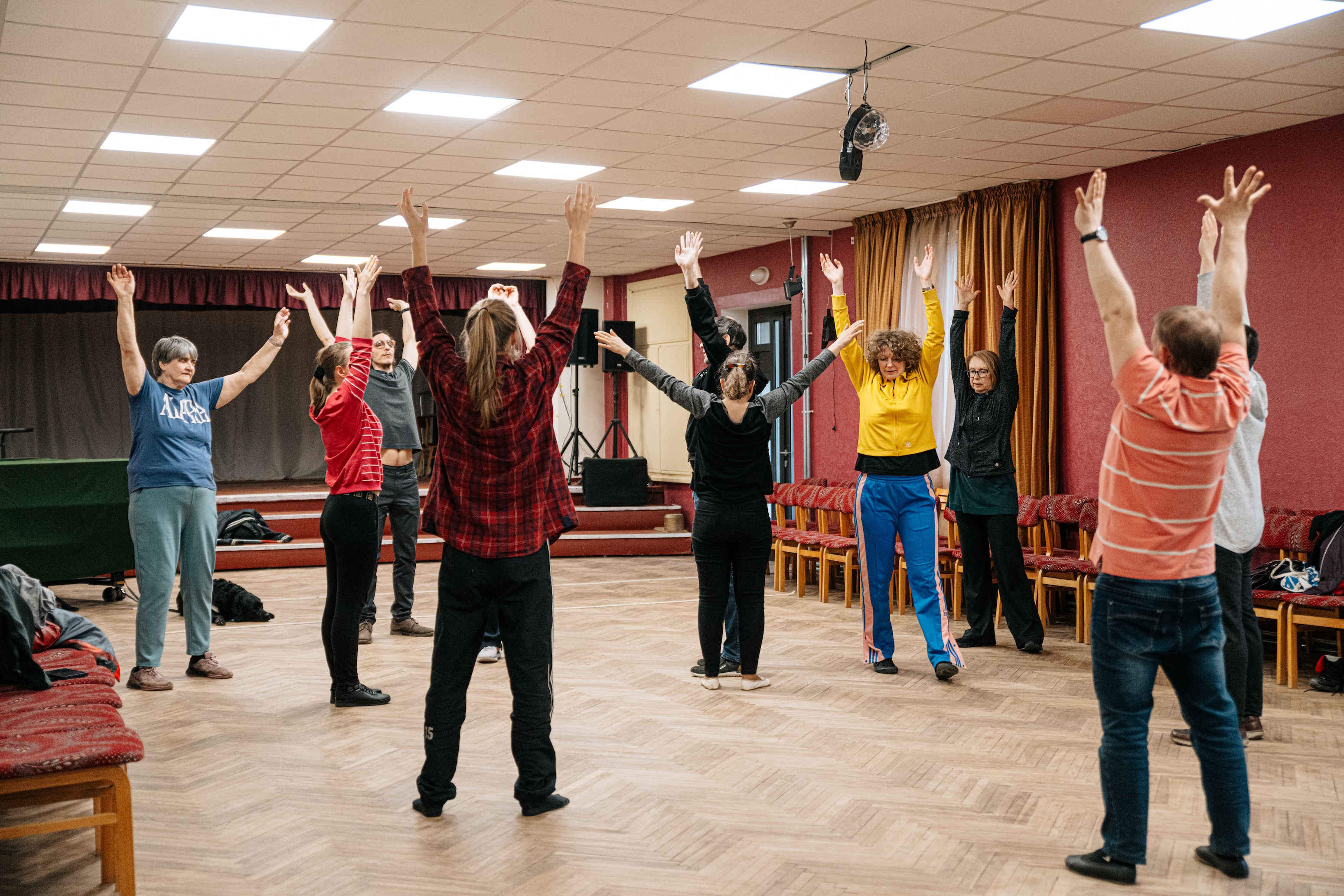
“Magic Carpets” residency, organised by New Theatre Institute of Latvia in collaboration with the Choreographers’ Association and the Latvian Association of the Blind, focused on making dance accessible to people with visual impairments and developing the skills of local choreographers. Its aim was to explore how to create dance classes in which movement can be learned without visual demonstration, and everyone can participate fully in the creative process.
From 27 to 29 March, Italian dance artist and curator Roberto Casarotto and dance dramaturg Greta Pieropan led the workshop Inclusive Dance Practices in Riga. Dance artists and other interested participants explored methods based on improvisation, instant composition, and the use of images and imagination to activate the body and develop individual and collective movement experiences. Practical exercises were accompanied by reflection and the exchange of experiences.
Alongside the open workshops, Roberto Casarotto and Greta Pieropan worked with four Latvian choreographers — Alise Putniņa, Ramona Galkina, Laima Jaunzema and Mārtiņš Emīls Aržanovskis. Together with a focus group from the Latvian Association of the Blind, they took part in a series of research workshops exploring and testing different approaches to creating dance classes for blind and visually impaired people.
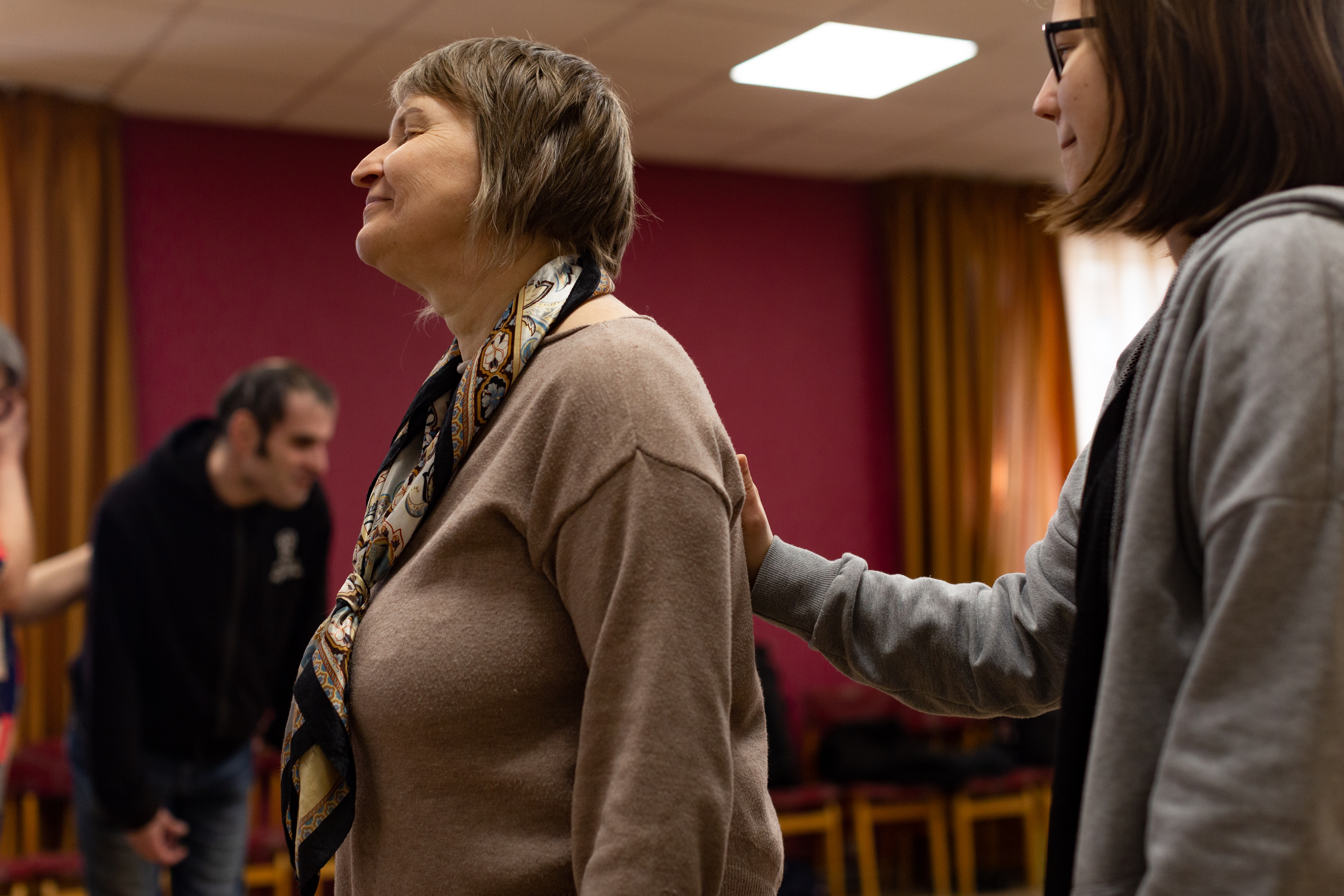
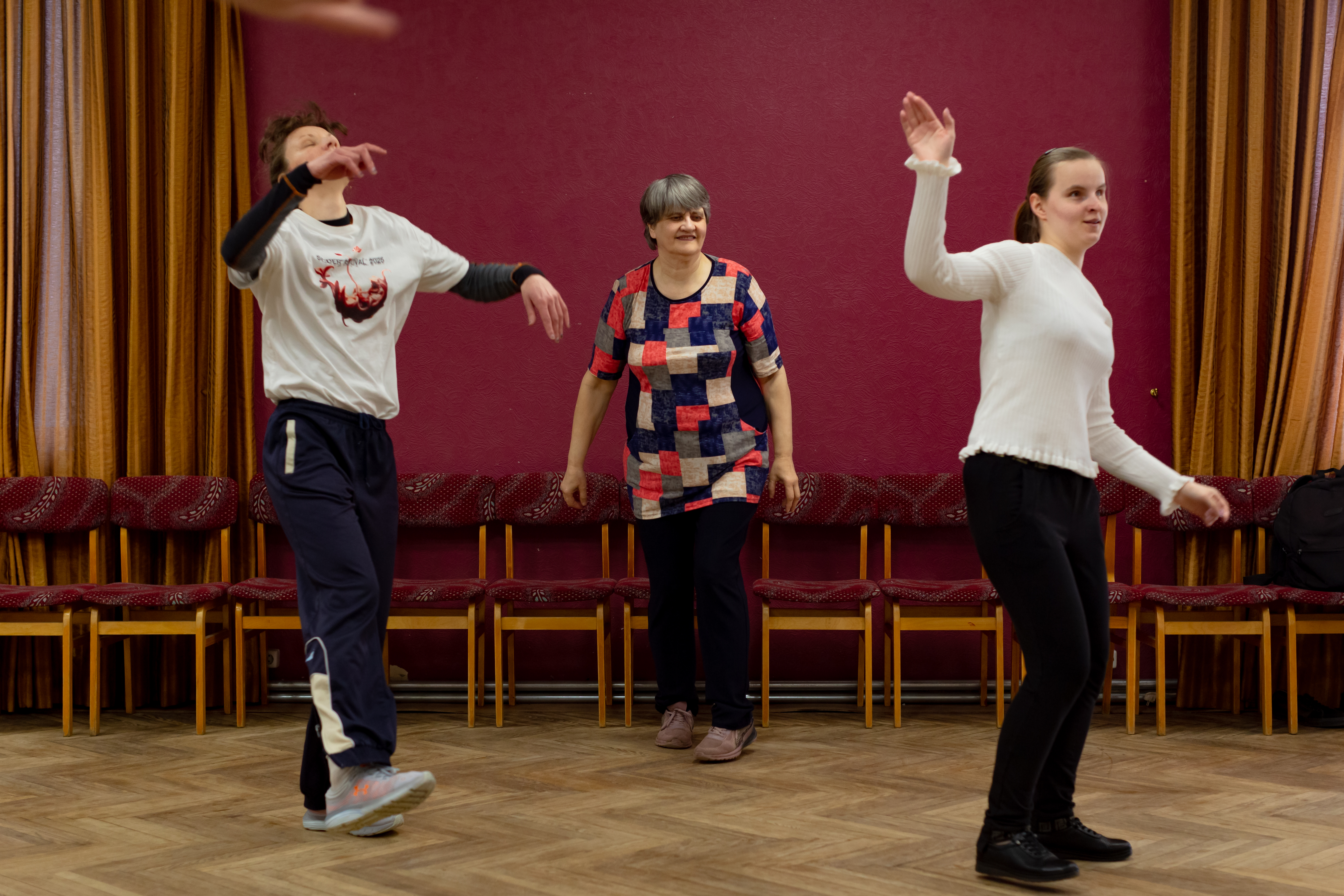
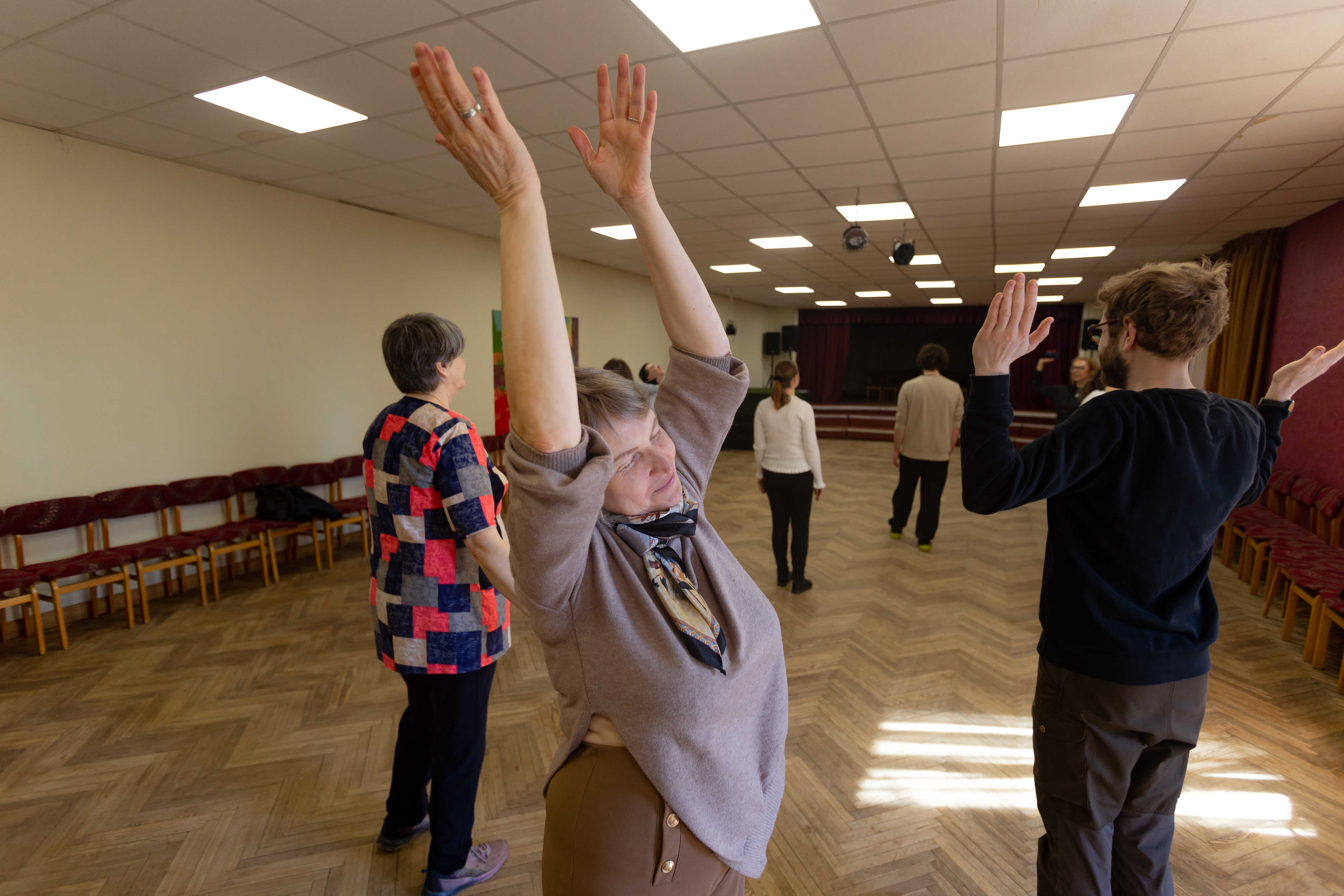
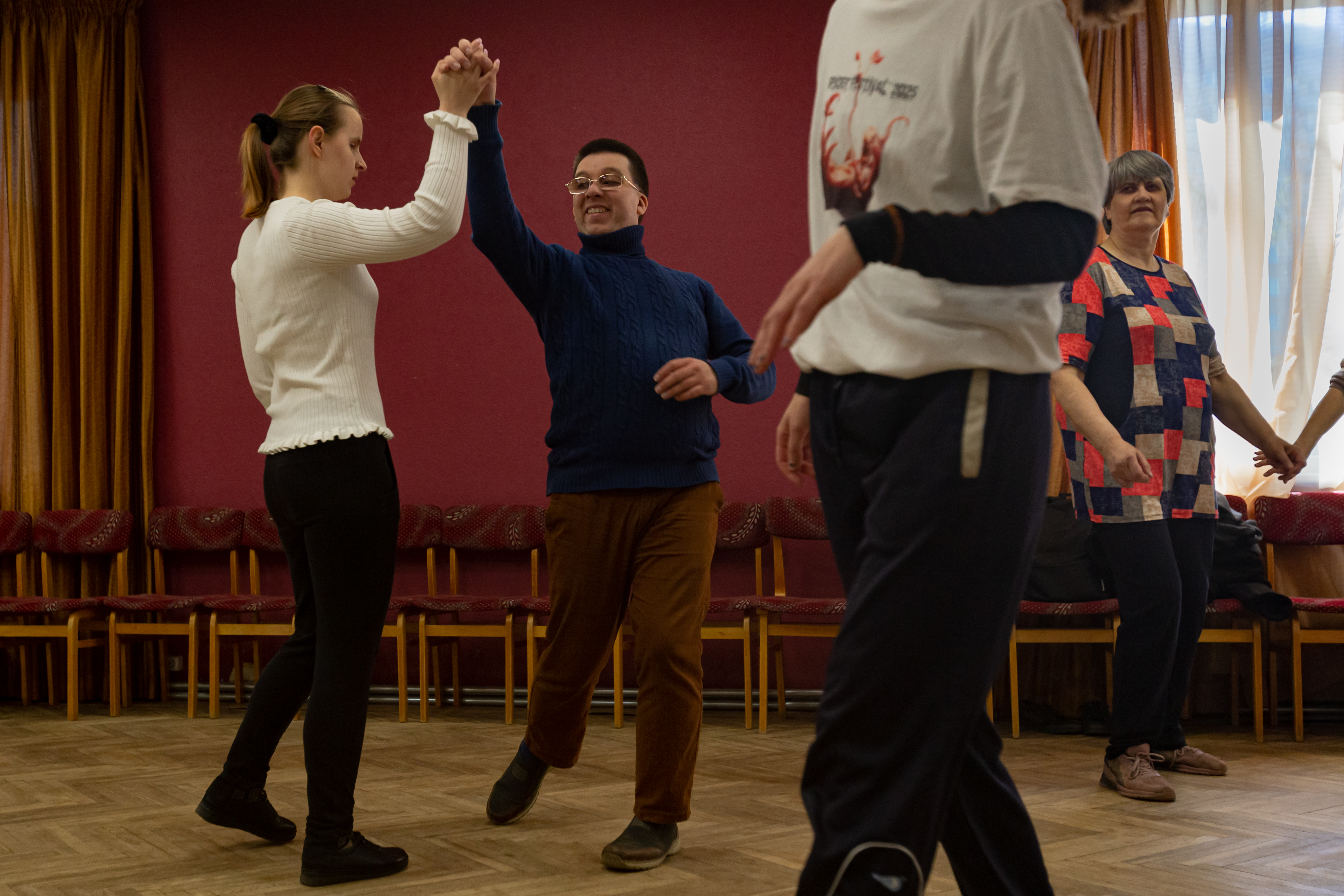
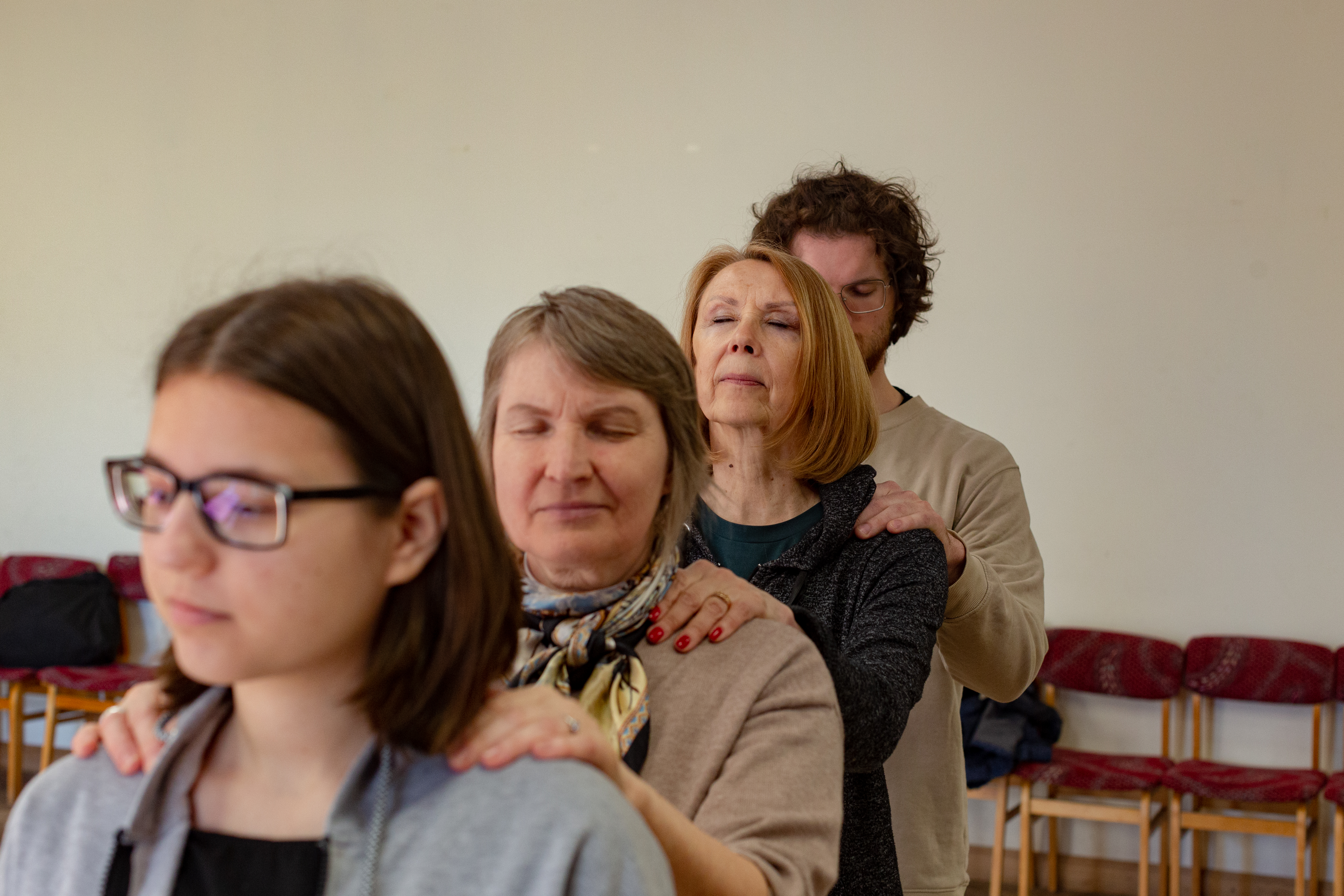
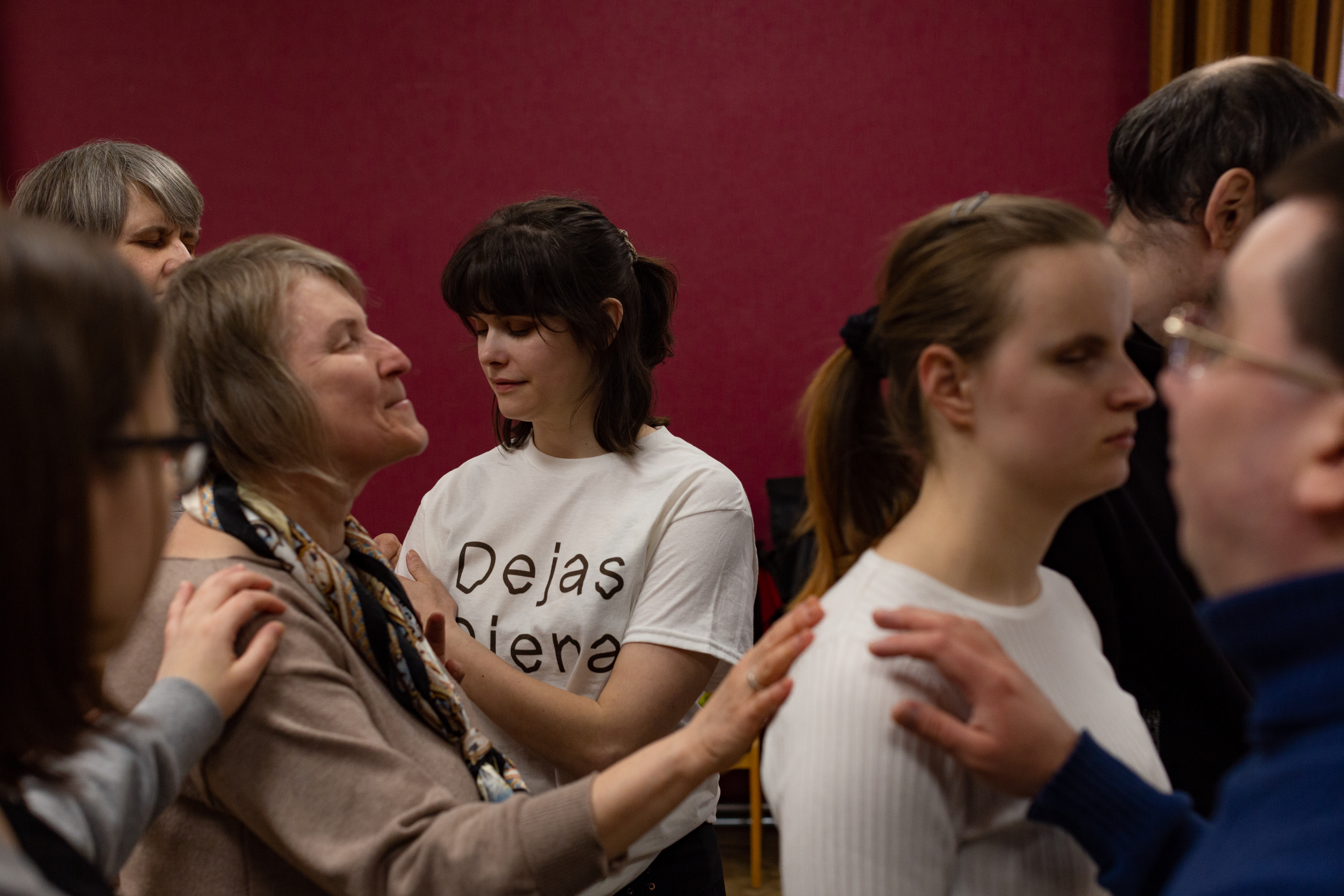
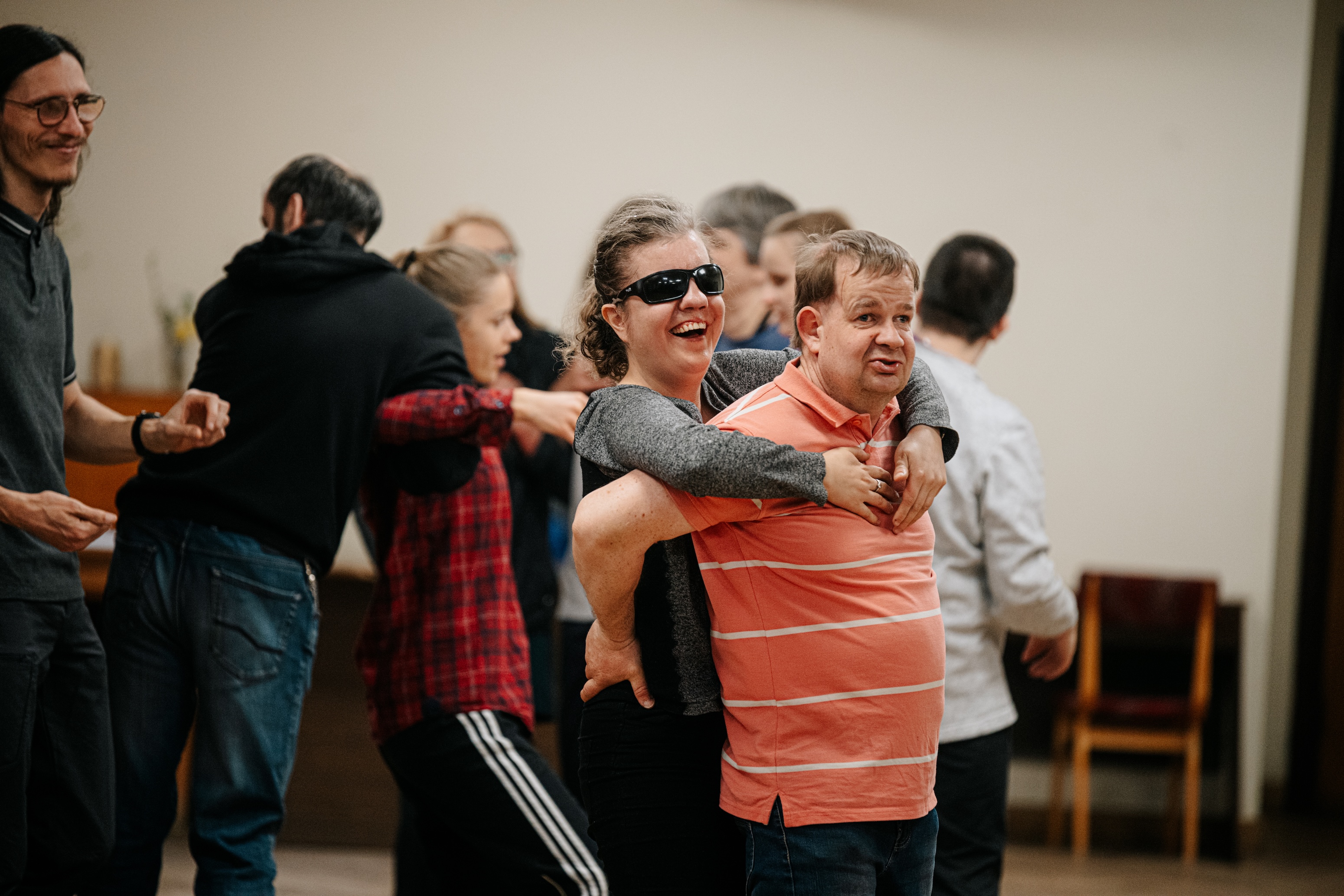
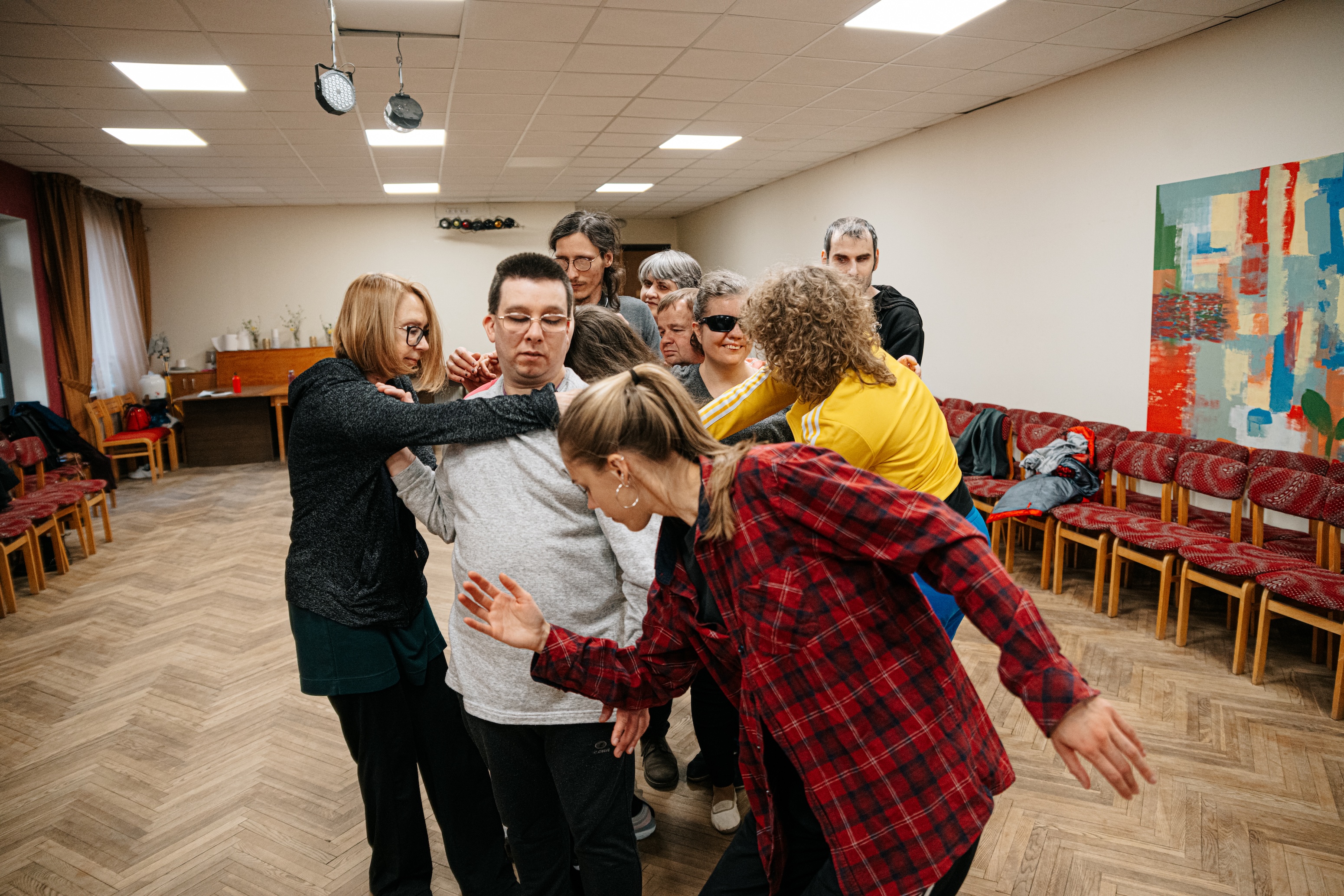
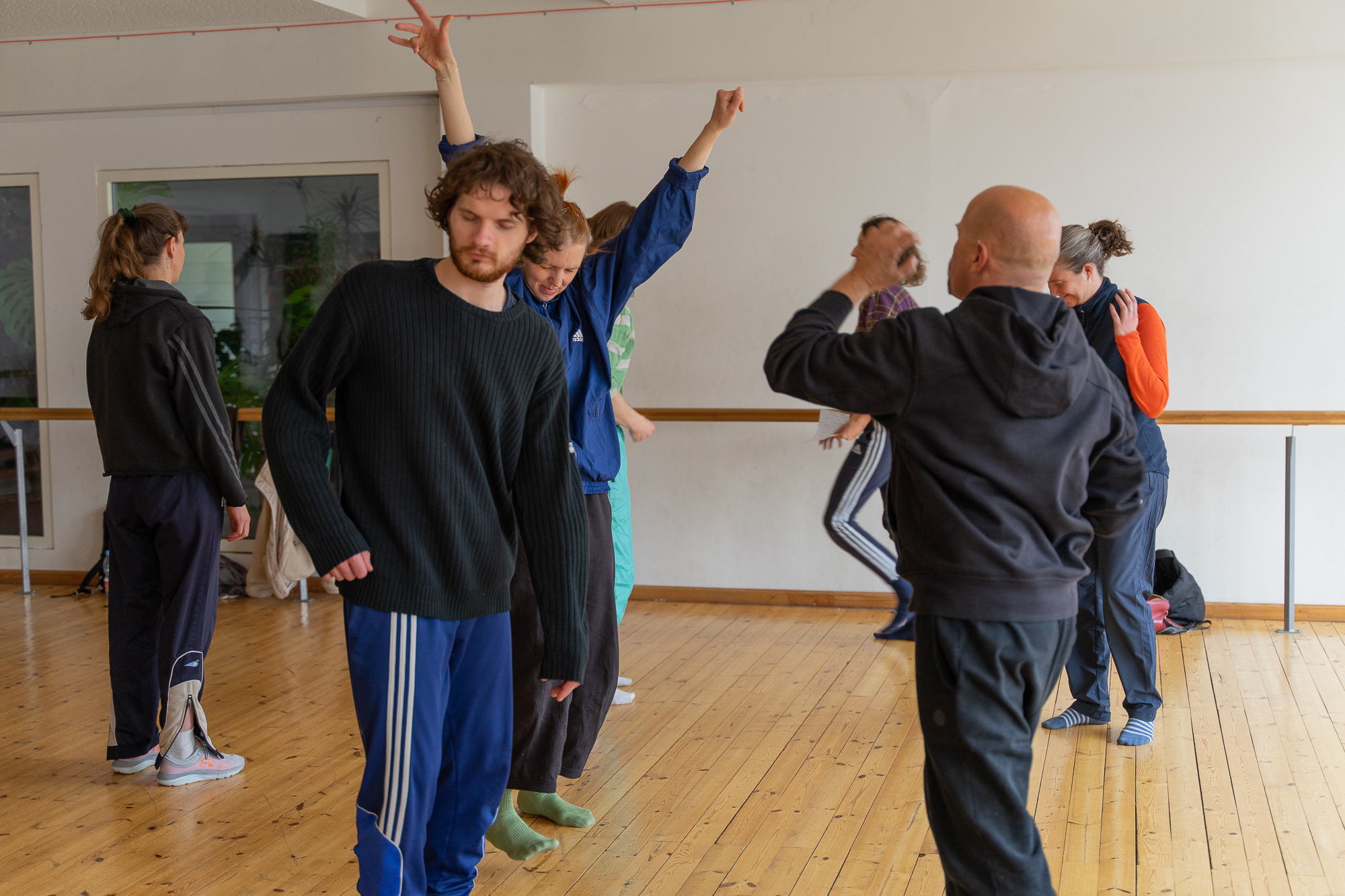
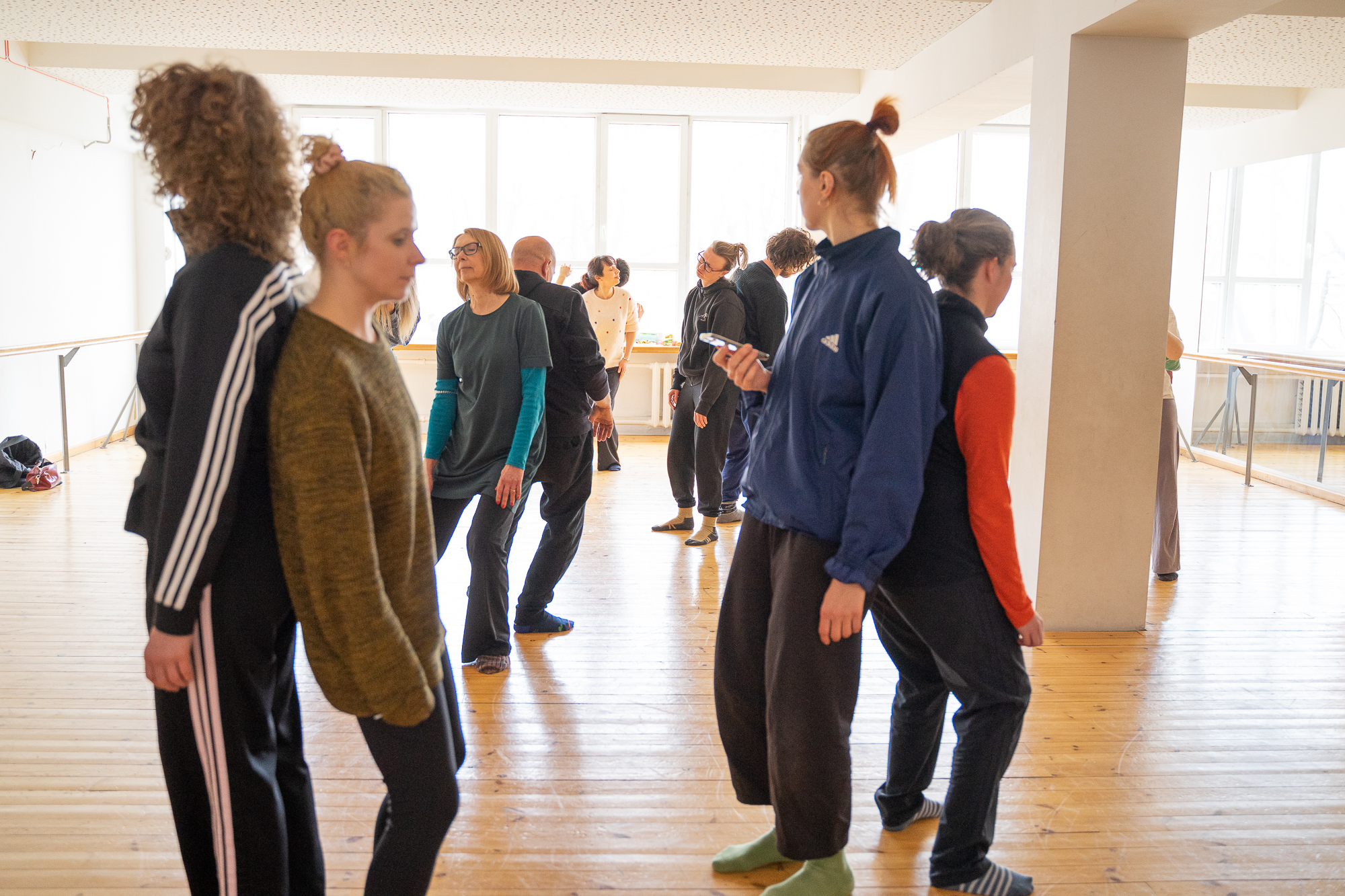
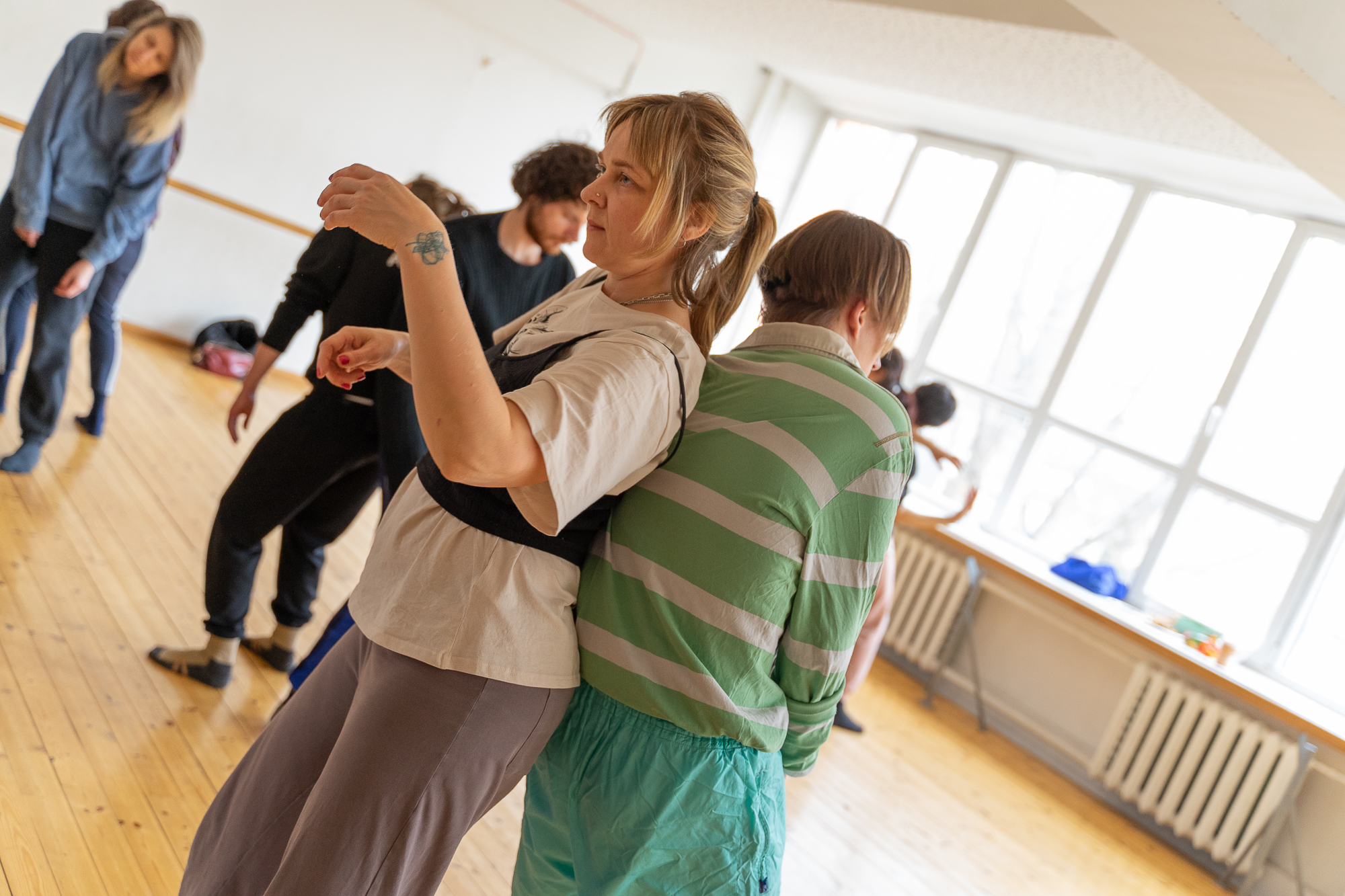
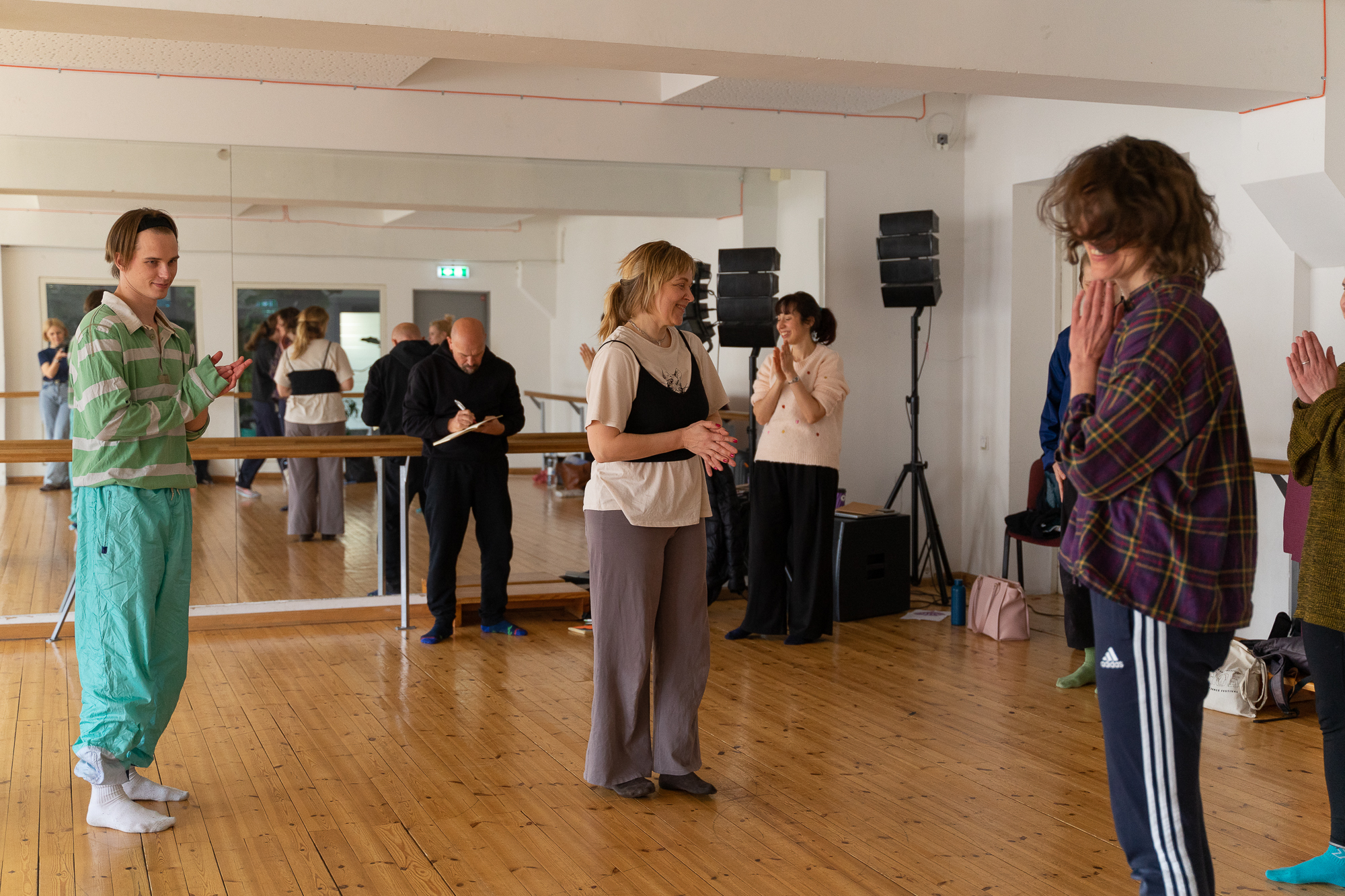
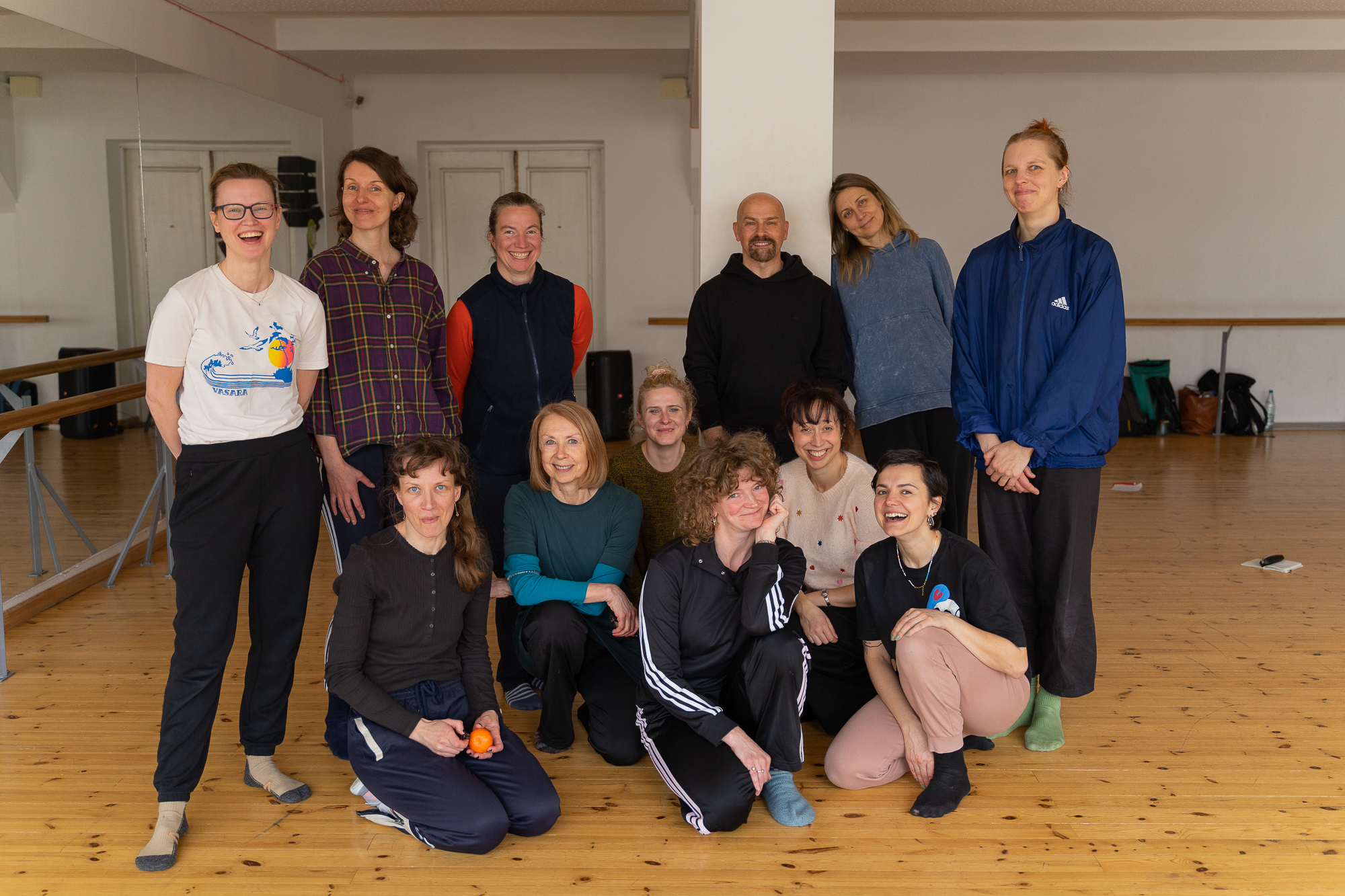
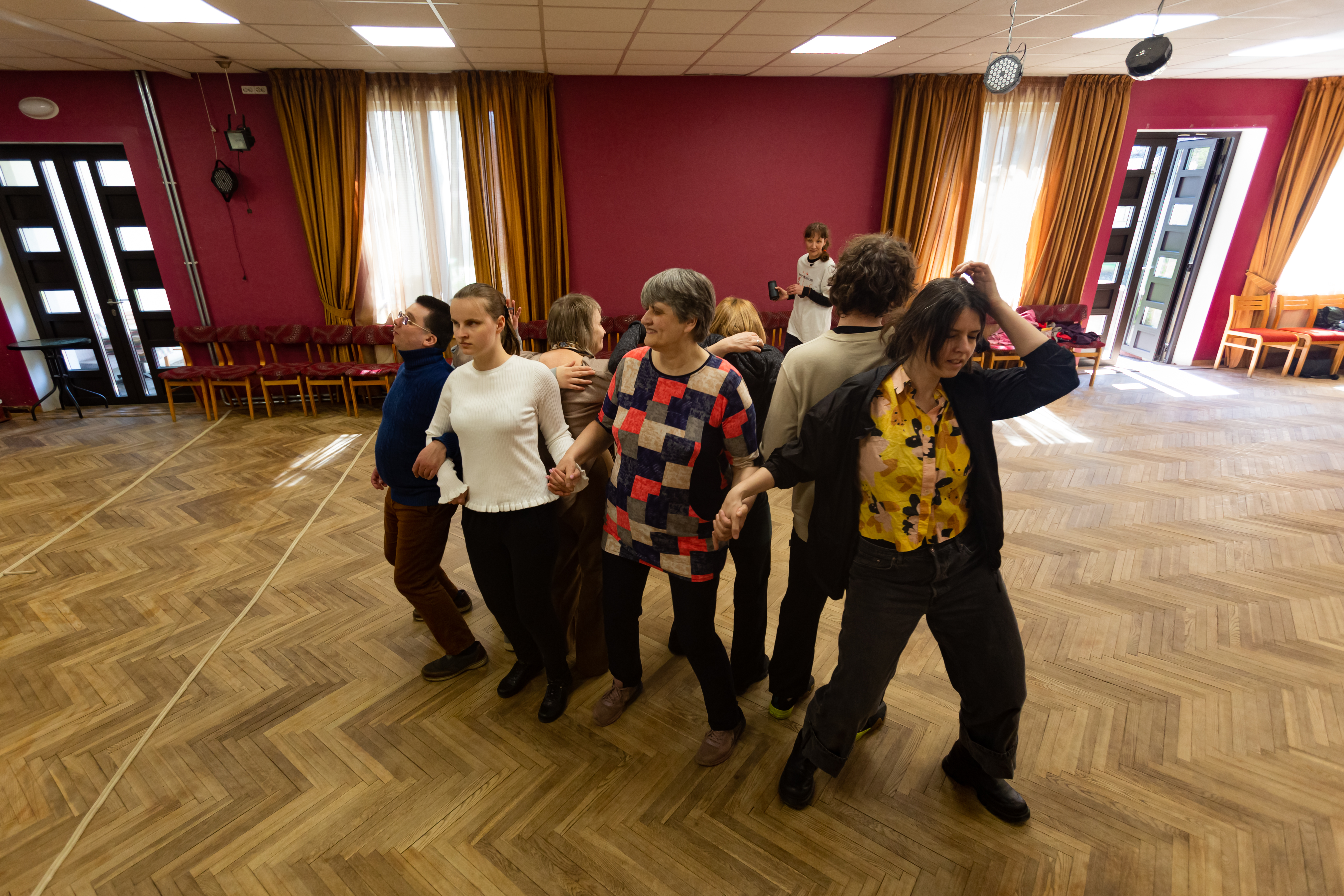
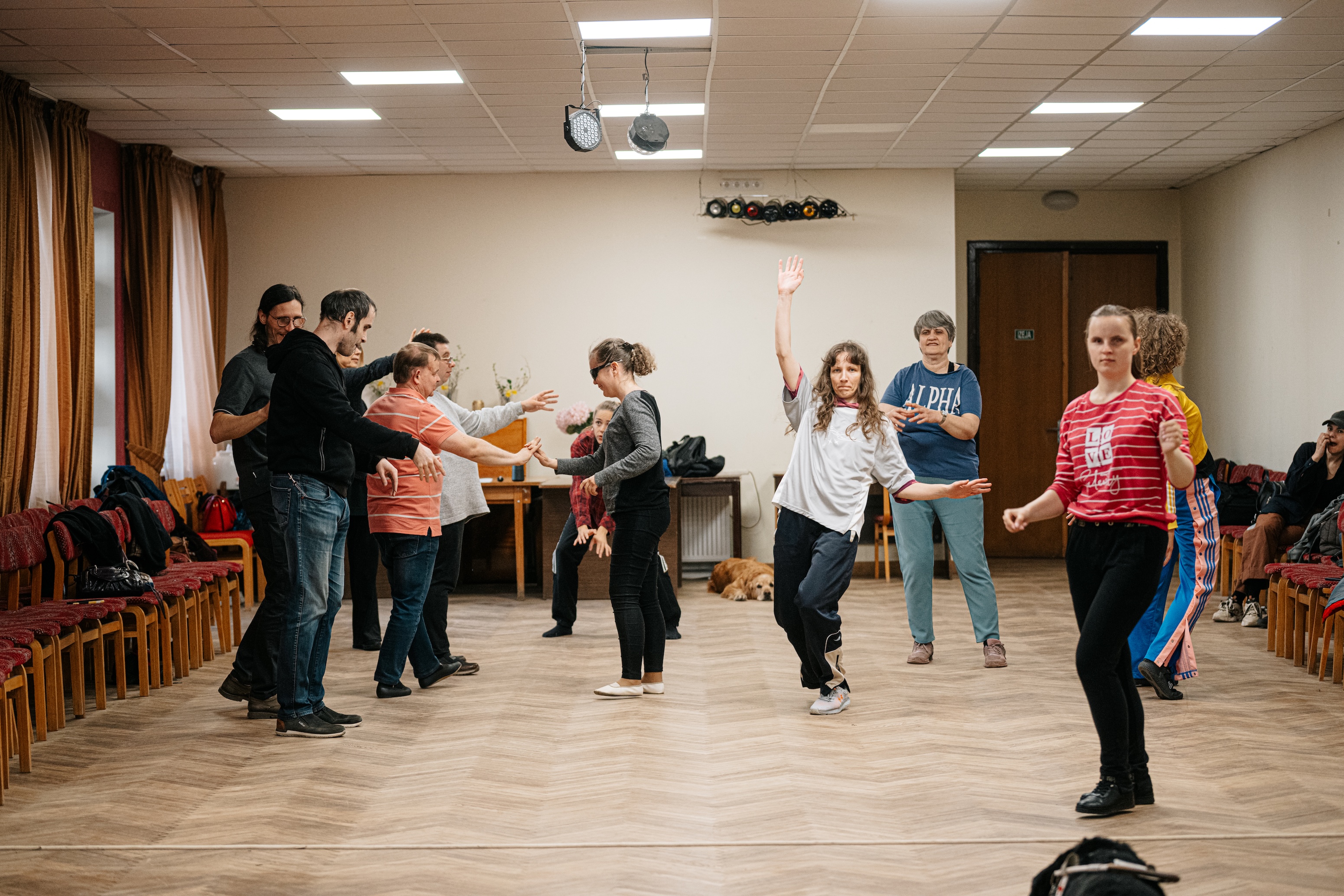
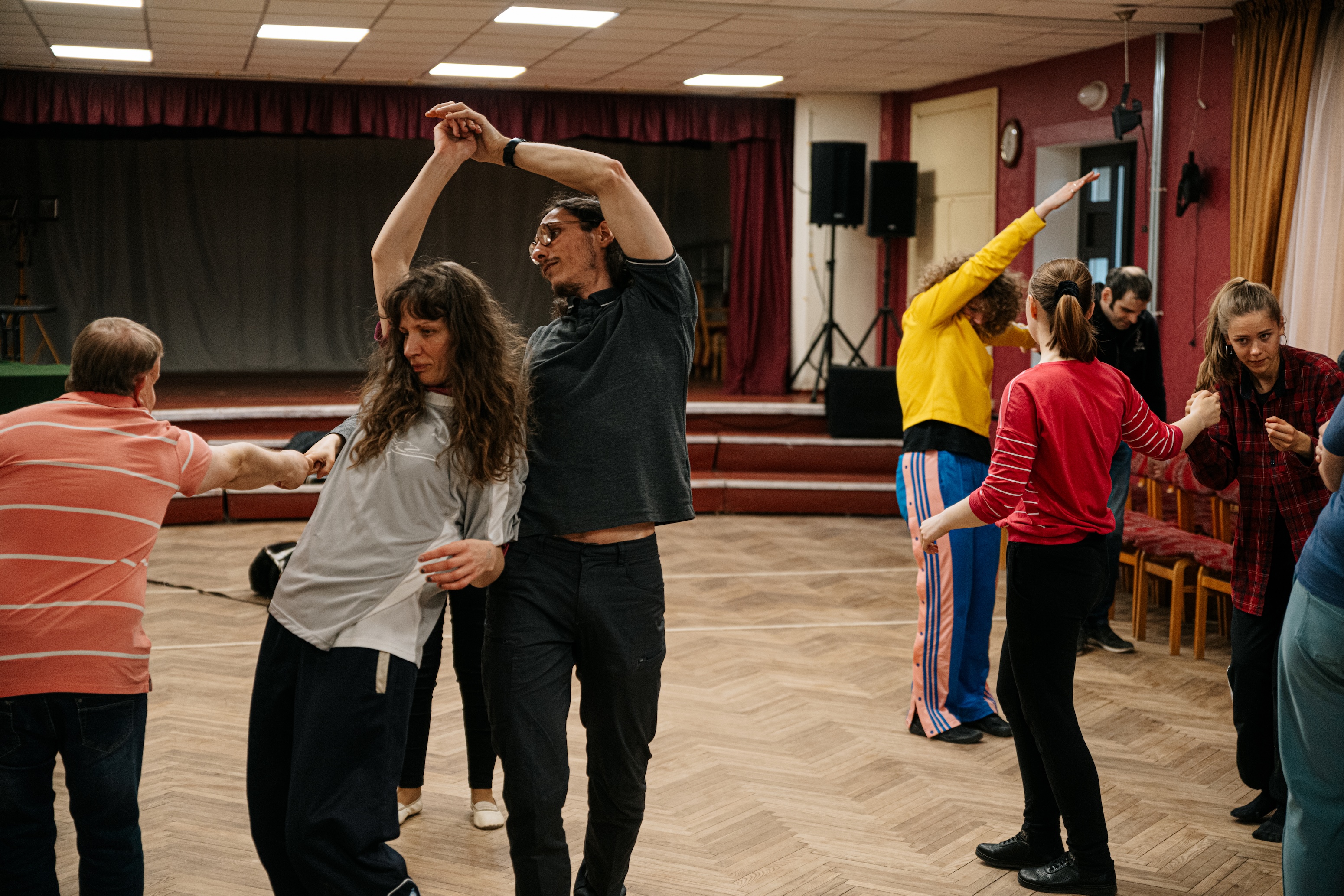
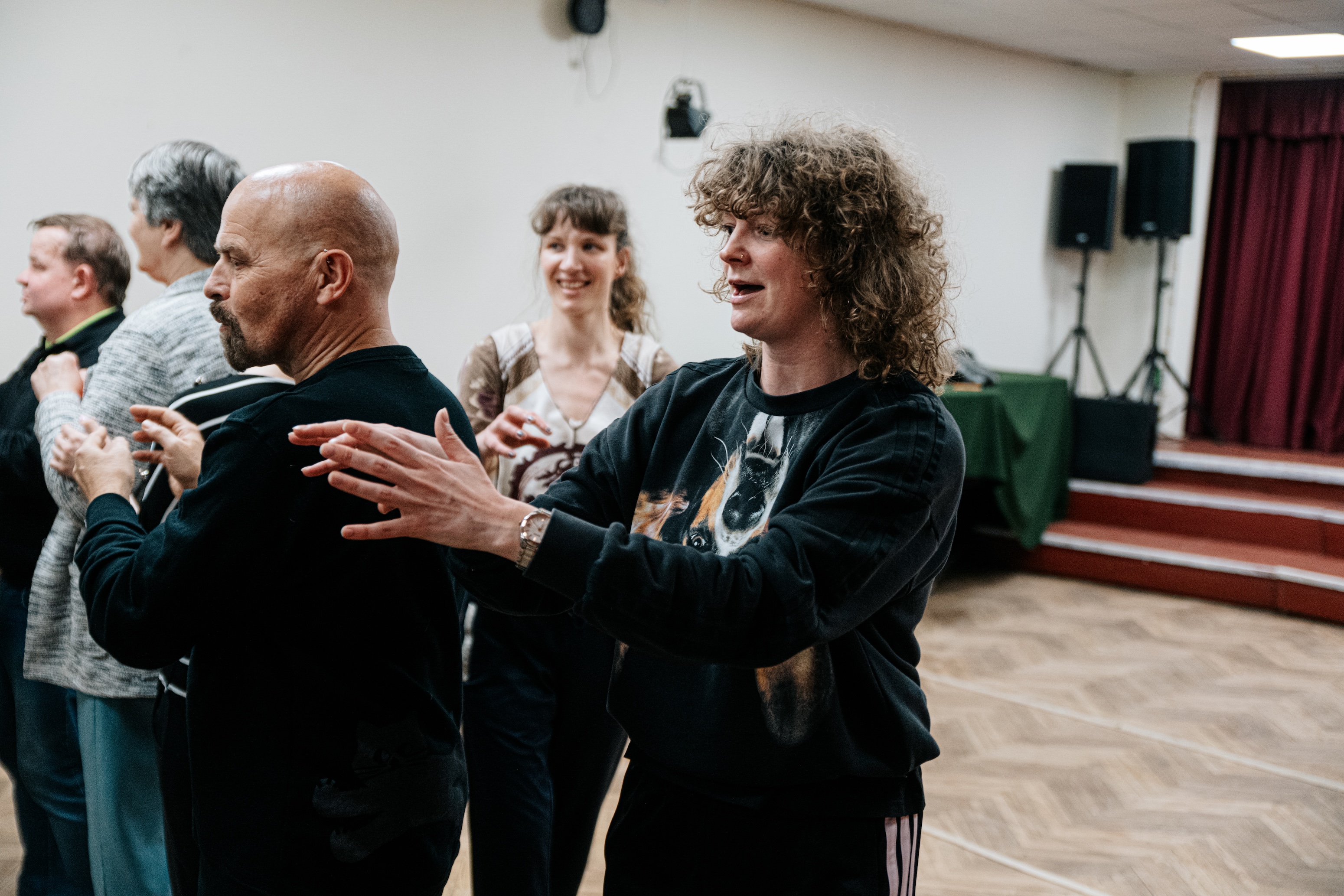
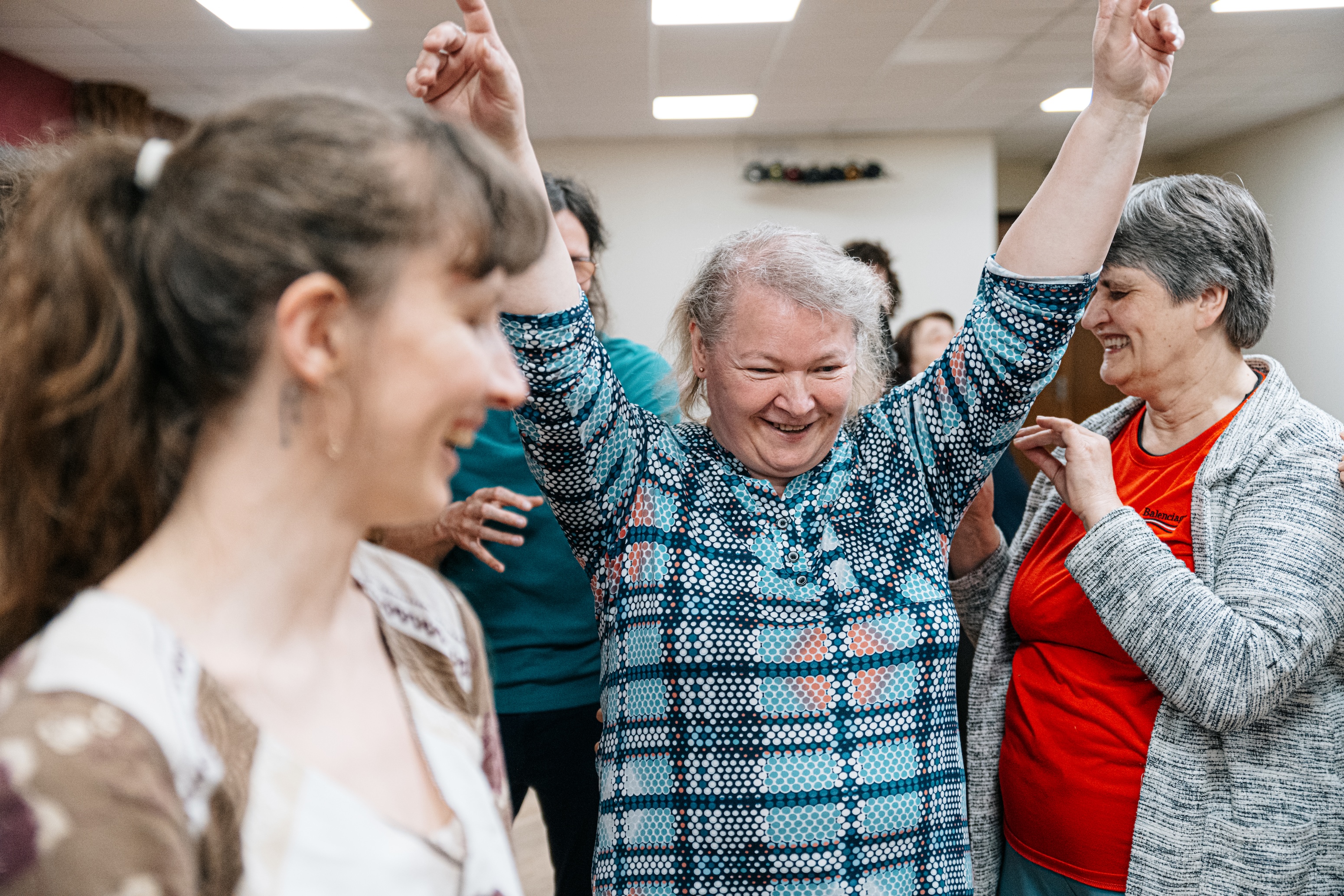
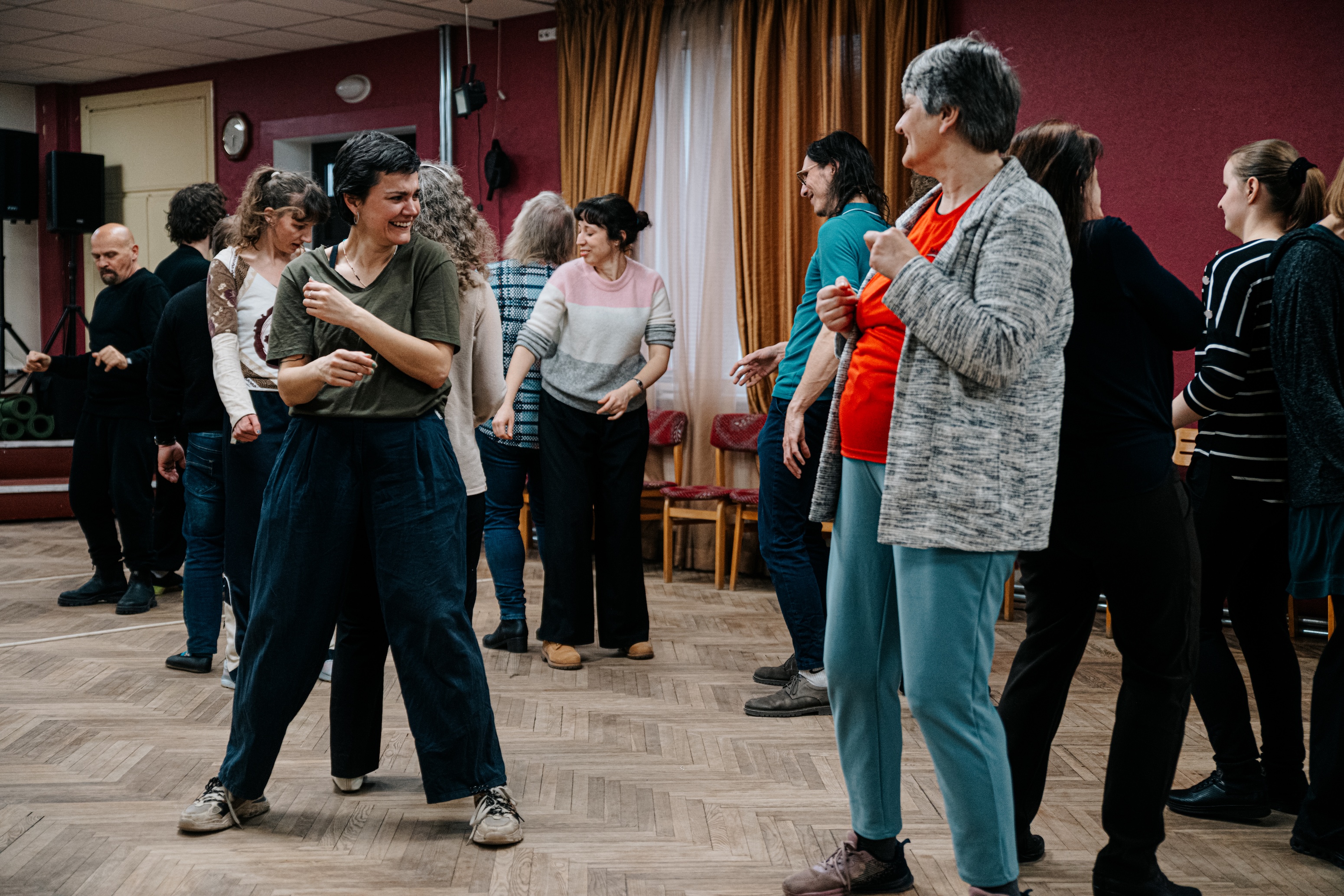
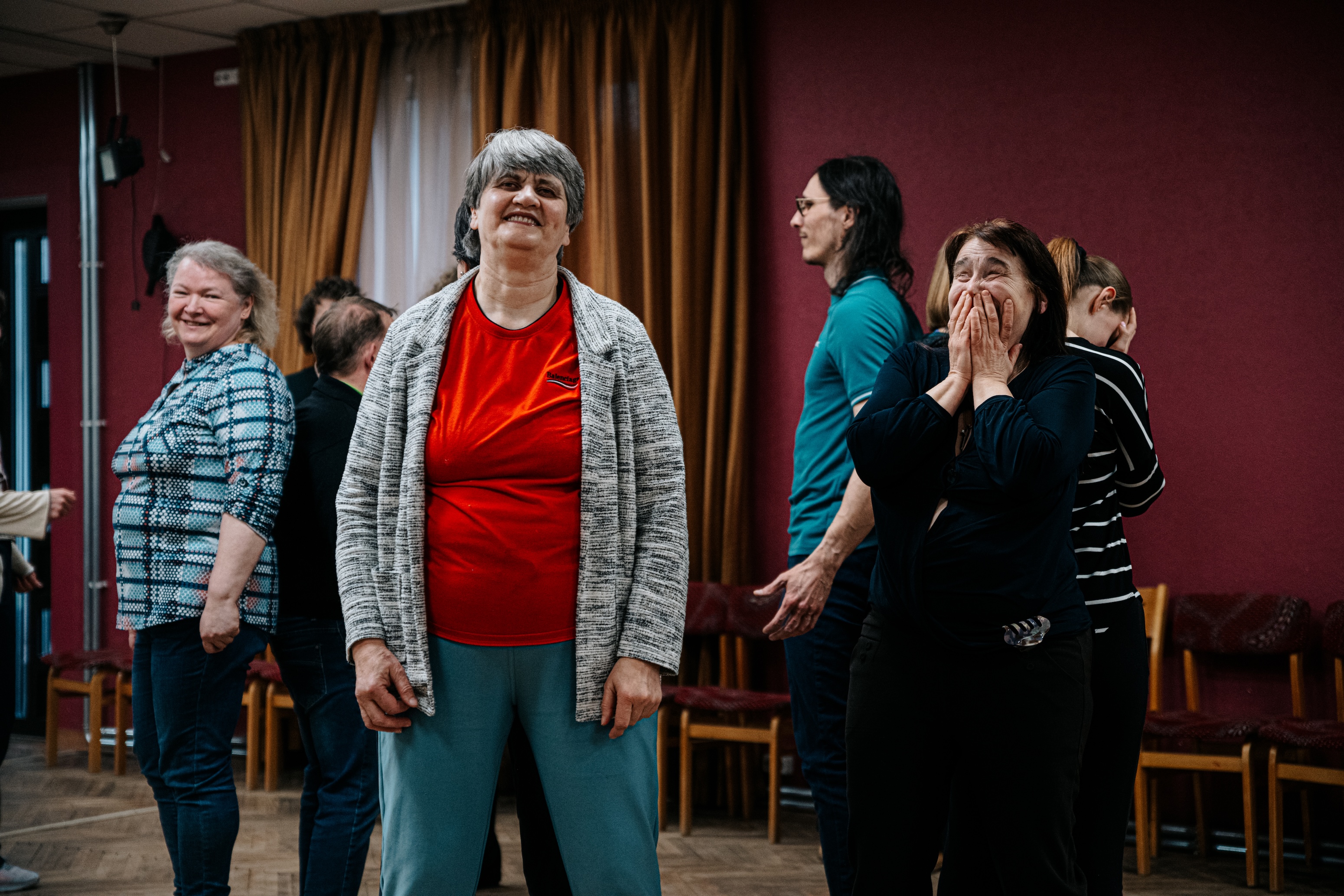
Photos: Aivars Ivbulis, Alla Zencenkova, Rūdolfs Deinats
Roberto Casarotto and Greta Pieropan shared their previous experience of developing dance projects for different groups in society and advancing accessible dance practices. Roberto Casarotto is a dance curator and one of the directors of Aerowaves, a European dance platform. He initiated the Dance Well project, which explores the possibilities of dance for people with Parkinson’s disease, and has developed projects using dance in work with people with diverse health and social experiences, including people with visual impairments. Greta Pieropan is a dance dramaturg who works with artists, collectives and communities, approaching dramaturgy as a practice of collaboration, listening and accessibility. Her experience includes dance projects in the fields of health, education and community engagement, including the Dance Well and Future Moves initiatives. This experience provided a foundation for the collaborative research with Latvian choreographers, exploring ways to adapt dance teaching methods and create more diverse opportunities for learning movement.
The process explored not only how to communicate movement without demonstrating it visually, but also how to draw on soft skills — communication, collaboration, empathy, creative thinking and adaptability. These skills are already an essential part of choreographers’ and dance artists’ work, although they are less often consciously recognised and highlighted. They became practical tools for creating classes in which movement is explored through different senses, imagination and interaction with others.
As a result of the research, each choreographer developed an individual dance class designed with the experiences of blind and visually impaired participants in mind, while remaining open to everyone. The classes were presented on 18 April as part of the Dance Day 2026 programme at Strazdumuiža Club. Visitors had the opportunity to take part in different movement and dance classes and experience the methods developed during the collaborative research process.
Feedback from focus group participants showed that this approach offered an opportunity to rediscover their own bodies and movement, activate creativity in new ways and take part in dance events that may previously have seemed inaccessible to them.
The residency fostered an exchange of experience between dance artists and the blind community, while encouraging choreographers to reconsider established ways of teaching dance and communicating movement. It demonstrated that accessibility is not simply an adaptation for a particular audience, but also an opportunity to expand dance practices themselves and explore new ways for people to experience movement and participate in creating it.
“Magic Carpets” is a Creative Europe platform uniting 17 European cultural organisations (14 active members and 3 partners for 2025–2028). It supports emerging artists as they embark on creative journeys in unfamiliar lands, working with local communities to produce new artworks that highlight local identities, enhance storytelling, and promote cultural accessibility and activism.
For more information, visit:
https://theatre.lv/category/magic-carpets/
https://magiccarpets.eu
“Magic Carpets” platform and artist residencies are co-funded by the EU’s Creative Europe programme.
